
DJI Inspire 1 Drone Teardown & Should Cost Analysis
Benchmarking study on a DJI Inspire 1 drone covering design analysis, BOM generation, feature mapping, architecture study, and detailed zero-based should cost analysis using xcPEP.
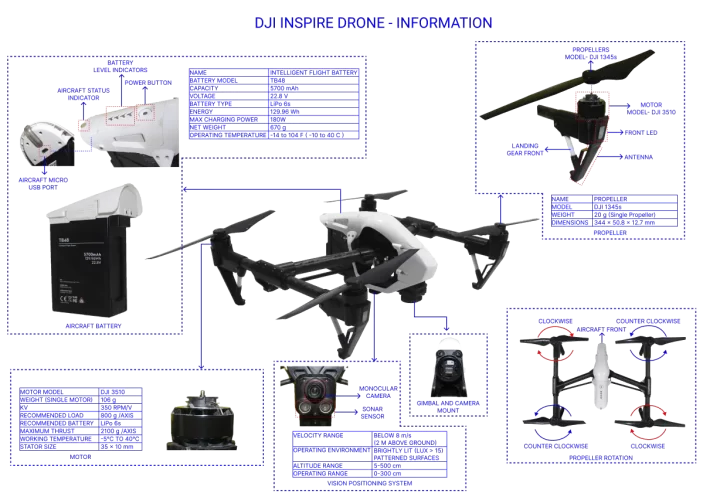
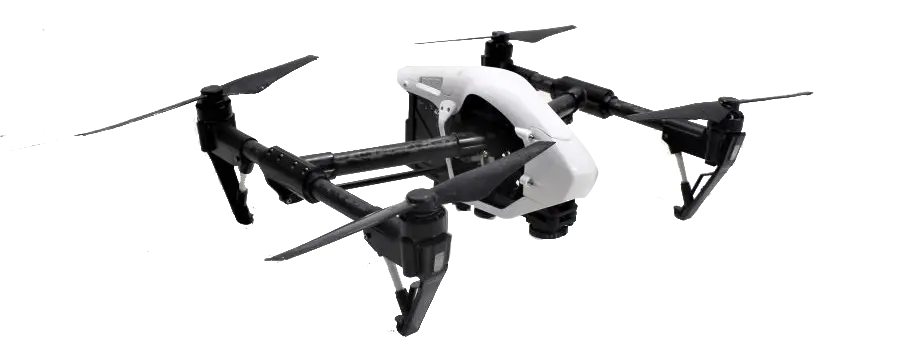
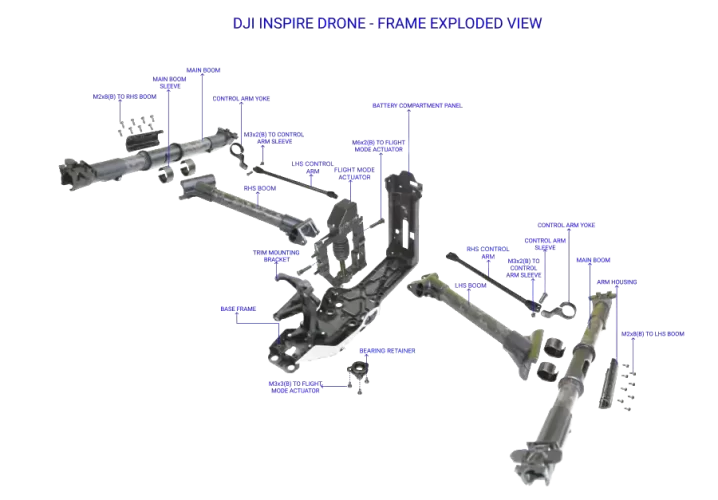
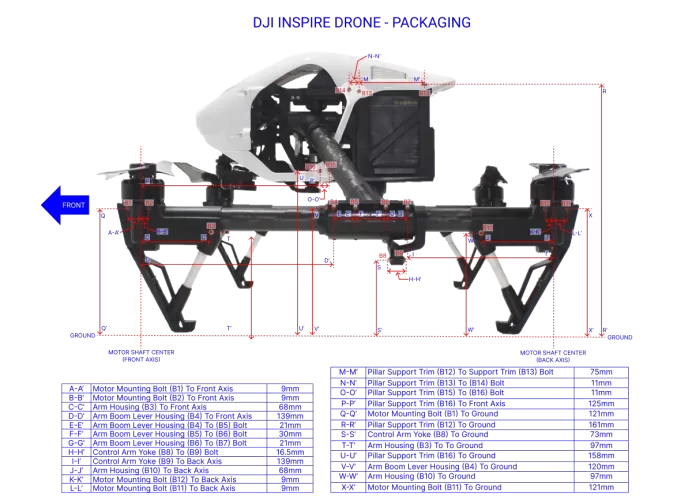
A comprehensive teardown and should-cost analysis of the DJI Inspire 1 drone system - including the drone aircraft, remote controller, charger, and storage case - mapping 184 features, 55 specifications, and complete BOM using xcPEP.
To benchmark the DJI Inspire 1 drone's design and direct cost through a detailed zero-based cost analysis exercise covering all drone components, sub-assemblies, and manufacturing processes.
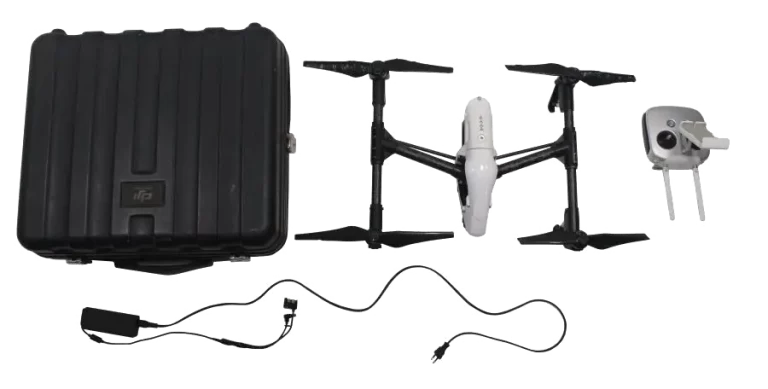
Professional-grade quadcopter drone with 4K camera, self-adaptive landing gear, intelligent flight battery, GPS navigation, and carbon fibre booms. Total system weight: 7195 grams.
Prominent features, BOM generation & weight analysis, distribution analyses (material, manufacturing, fastener, PCB), architecture study (74 diagrams), and detailed should-cost breakdown.


01Executive Overview
The DJI Inspire 1 is a professional-grade quadcopter drone system designed for aerial photography and videography. The complete system includes the drone aircraft, remote controller, intelligent flight battery, charger, and storage case. A detailed teardown was conducted by ASI Engineering covering feature mapping, multi-level BOM generation, architecture study, and zero-based should cost analysis using xcPEP and xcPROC.
02Prominent Features
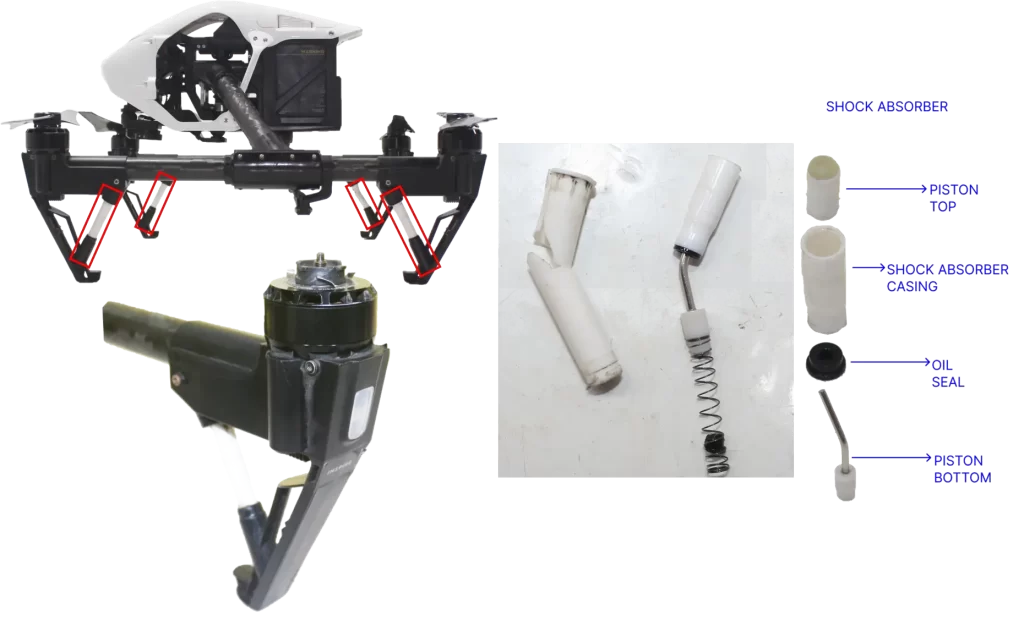
1. Shock Absorber
A shock absorber is provided between the upper body and the lower body of the DJI Inspire drone. The shock absorber has an outer rubber material shell and is filled with a non-Newtonian fluid. If any impact is given to the drone on landing, it absorbs the impact and protects the inner components from being damaged.
2. Monocular Camera
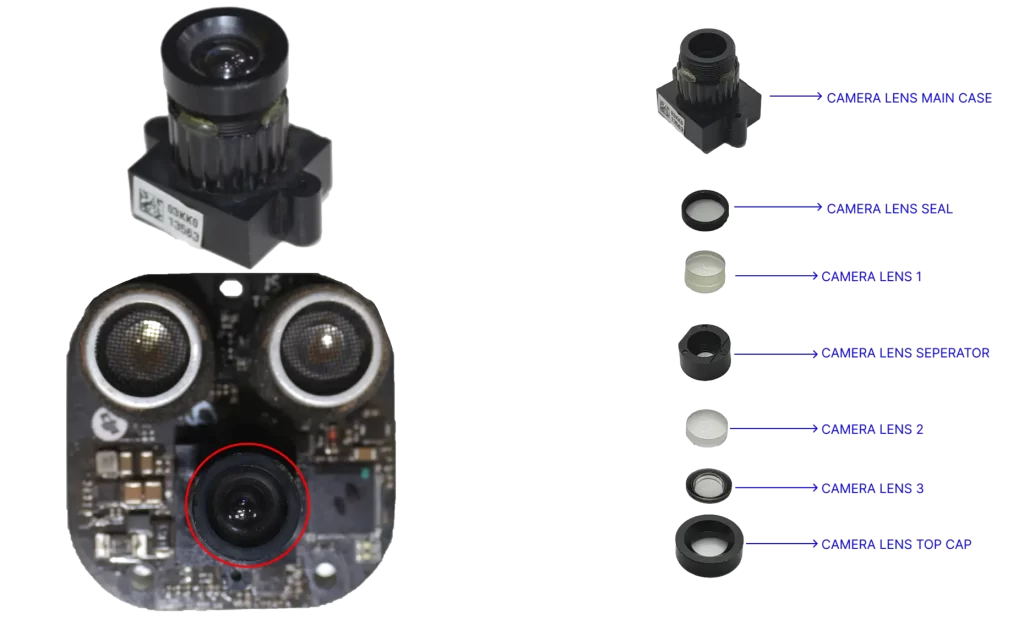
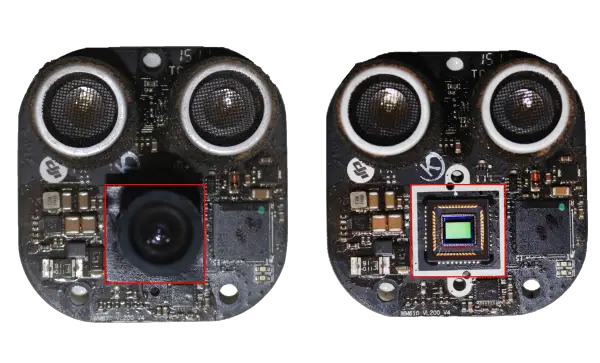
The DJI Inspire drone is provided with a Monocular Camera Vision Positioning system to capture the image of the ground surface, this helps the processor module to detect the drone's current location. The Monocular Camera System of DJI Inspire drone uses 2 cameras mounted at bottom of the DJI Inspire body. They help to sense if there is any obstacle and enable it to hover at a point.
3. Monocular Camera Sensor
The sensor of the monocular camera system uses an ultrasonic sensor where the reference obstacle height ranges from 0.3 to 5m. After this range the DJI Inspire drone is not able to determine the obstacle.
4. GPS Antenna
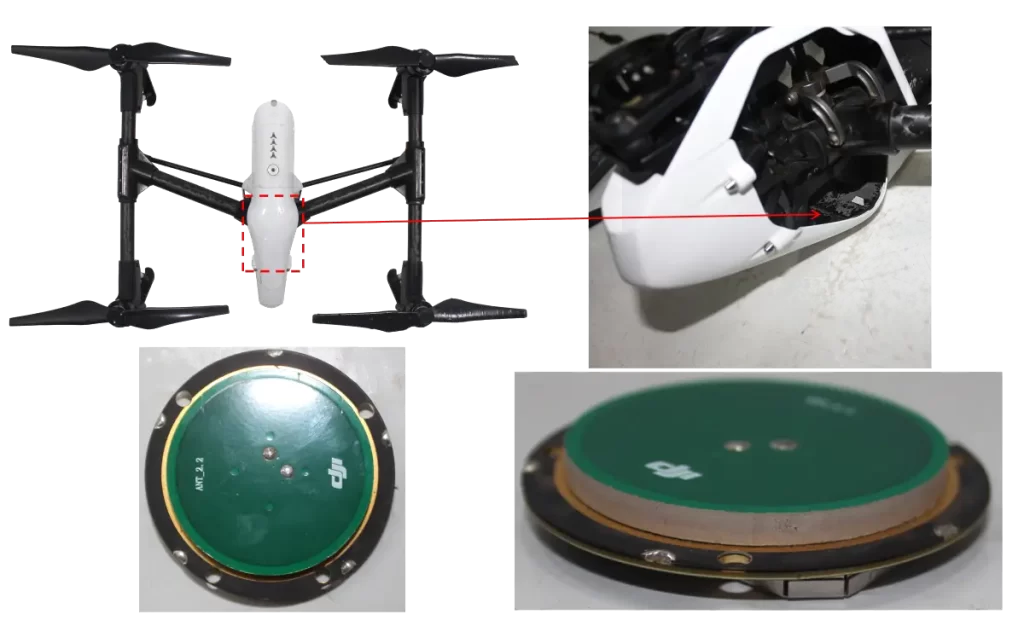
A ceramic type of antenna is provided for this purpose as it is smaller in size and more resistant to environmental noise.
GPS is provided in DJI Inspire drone to monitor the current location of the vehicle and communicate with the remote controller.
5. RTH (Return to Home)
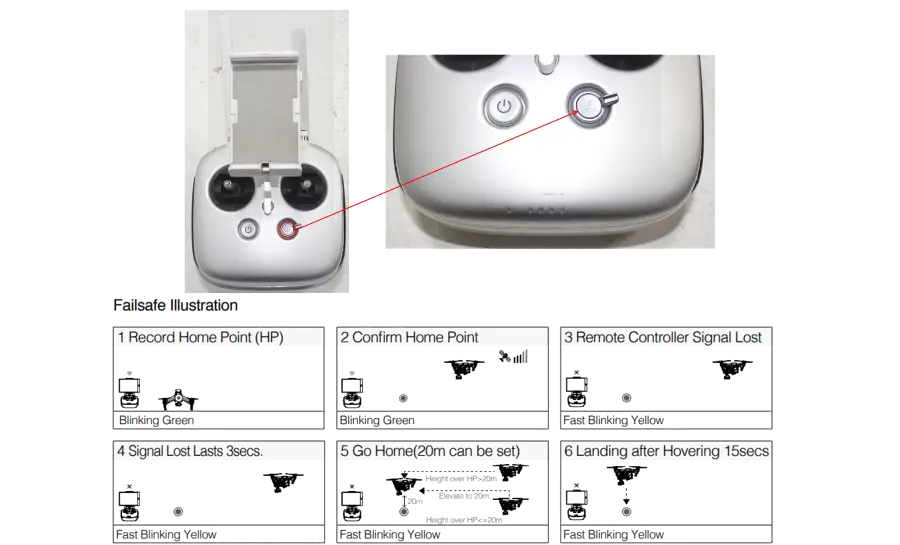
DJI Inspire drone is provided with a feature that allows the drone to return to the home point (previously set by the user) or to the current location of the remote controller. Three types of RTH have been provided:
- Smart RTH - This can be activated using a remote controller or DJI GO APP, this feature is user dependent.
- Low Battery RTH - When the battery reaches a critical level DJI Inspire drone is made to land automatically.
- Failsafe RTH - DJI Inspire drone returns to the previously set home point when the signal is lost with the remote controller for more than 3 seconds, provided the compass is working.
6. Intelligent Flight Battery System
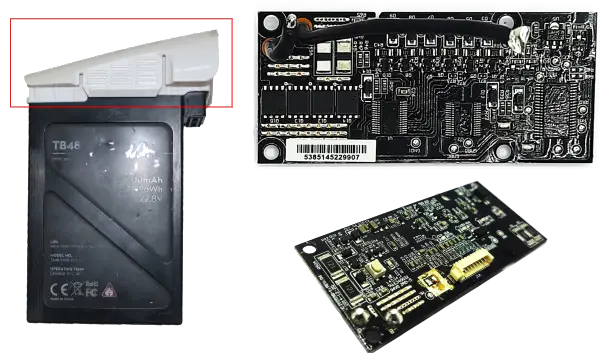
DJI Intelligent Flight Battery System is provided in DJI Inspire drone where the Battery management system unit is integrated within the battery (BMS PCB is provided on top of the battery).
The maximum flight time using the standard battery is 18 minutes.
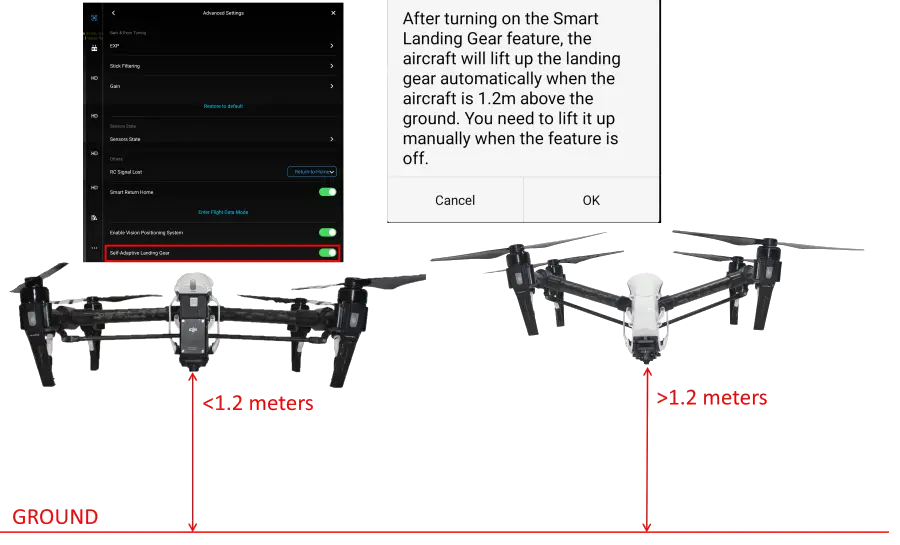
7. Self-Adaptive Landing Gear
This feature allows the landing gear to lift automatically when the DJI Inspire drone is 1.2 meters from the ground surface.
This feature can be enabled using DJI GO App, it is present under main controller settings.
8. Flight Modes
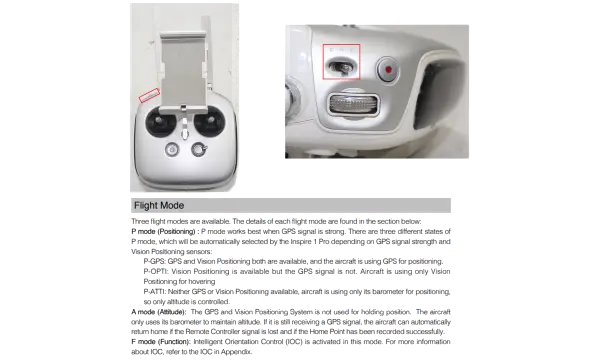
Three flight modes are provided in the DJI Inspire drone:
- P-Mode (Positioning Mode): Works best when GPS signal is strong.
- A-Mode (Altitude Mode): Only barometer used for altitude. GPS and Vision Positioning not activated.
- F-Mode (Function Mode): IOC (Intelligent Orientation Control) mode activated. Used for photos where nose direction is not the forward direction.
9. Servo Motor
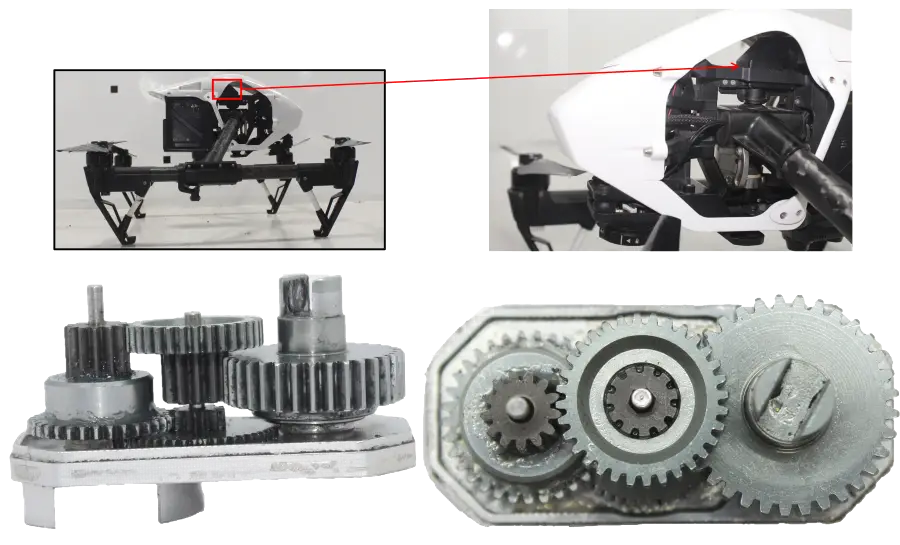
Servo motor is used for the motion of boom when DJI Inspire drone is switched between different modes. It uses a rack and pinion gear for linear motion of boom. Gear reduction is used inside the servo motor for increasing the torque. 4 gears are provided out of which two are used for gear reduction.
10. Propeller Direction
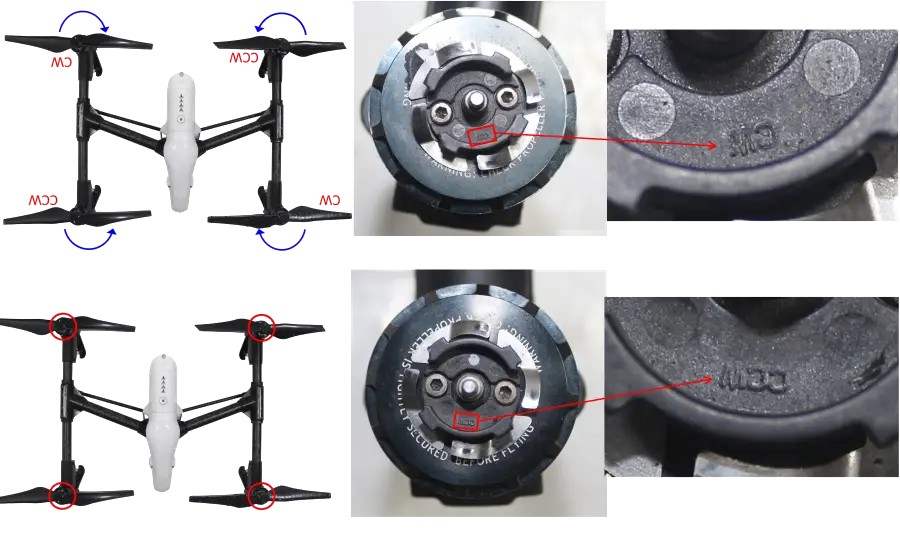
The Propeller blades are made to rotate in a specific direction to balance DJI Inspire drone when it is in flight. Two diagonal blades rotate in the same direction (2 CW, 2 CCW) to keep the drone stable. The directions are specified on the motor casing (Propeller Mounting Base).
03BOM & Weight Analysis
Generation of Bill of Material
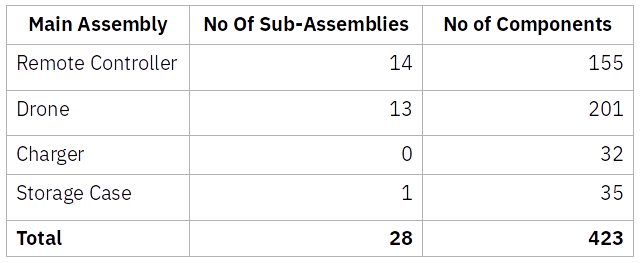
We have conducted a last-level teardown on the DJI Inspire drone. In the BOM study data relating to various part-attributes are mapped. We used a Multi-level BOM structure which gives greater details on the assemblies and their child parts.
We have 72 total BOM parameters such as weight, box dimensions, thickness, raw material content, etc., and we mapped an average of 35 parameters per part or component depending upon its part complexity category.
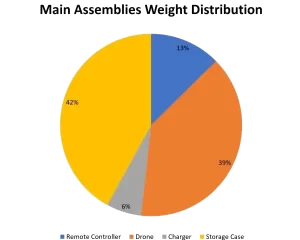
System Weight Distribution
The total weight of the DJI Inspire Drone system (including drone, storage case, remote control & battery) is 7195 grams.
- Storage Case accounts for 42% of the total weight (3020g) - heaviest assembly.
- Charger accounts for only 6% (450g) - lightest assembly.
- Drone weight accounts for 39% (2820g including battery and propellers).
- Remote Controller accounts for 13% (910g including device holder).
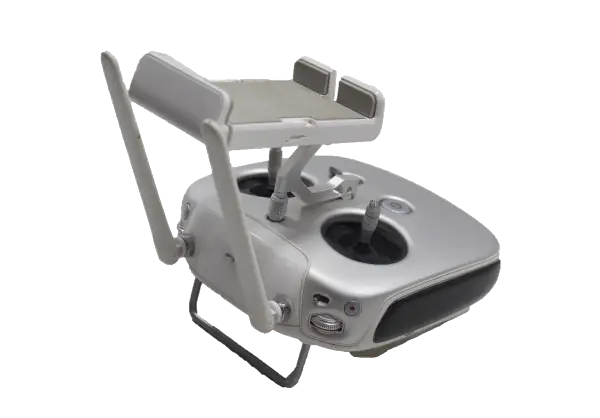
Remote Controller Weight Distribution
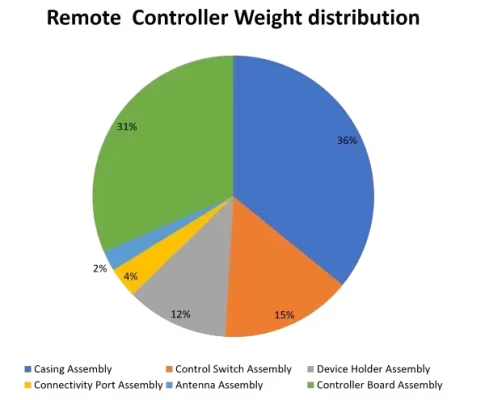
The total weight of the DJI Inspire Drone Remote Controller is 909 gm.
- Controller Casing: 36% - made of >PC+ABS< with stamped aluminium trim.
- Antenna assembly: only 2% - lightest sub-assembly.
- Controller PCB + Battery module + GPS module PCB: 31% combined.
- Control switch assembly (switch PCB, camera dial, gimbal dial): 15%.
Drone Weight Pareto Analysis
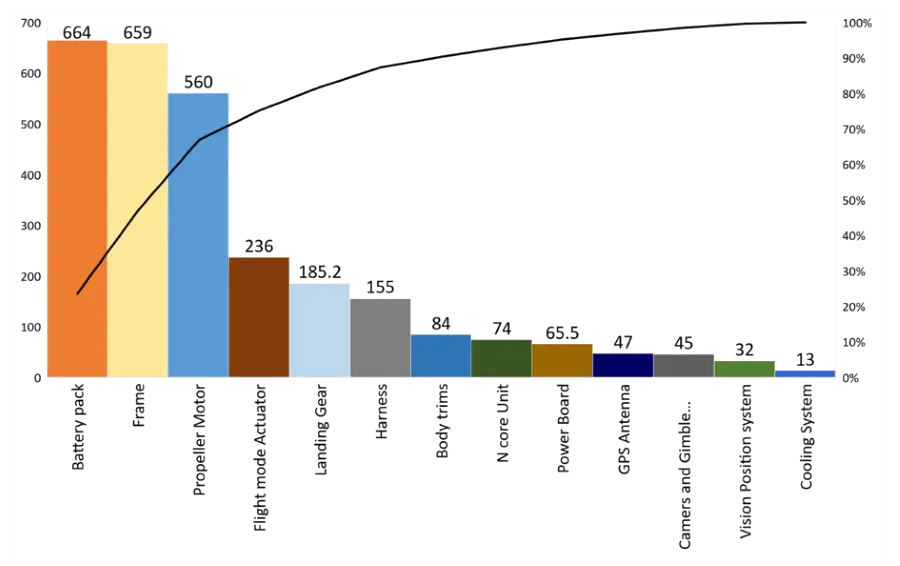
The total weight of the DJI Inspire Drone Aircraft is 2820 gm.
- Battery Pack, propeller motor, flight mode actuator and frame: 75.1% of total drone weight.
- Battery Pack (BMS PCB, cells, cell interconnection PCB): 23.5%.
- Four propeller motors combined: 560g (19.9%).
- Cooling Fan assembly of N-Core unit: only 0.46%.
Raw Material Distribution Pareto
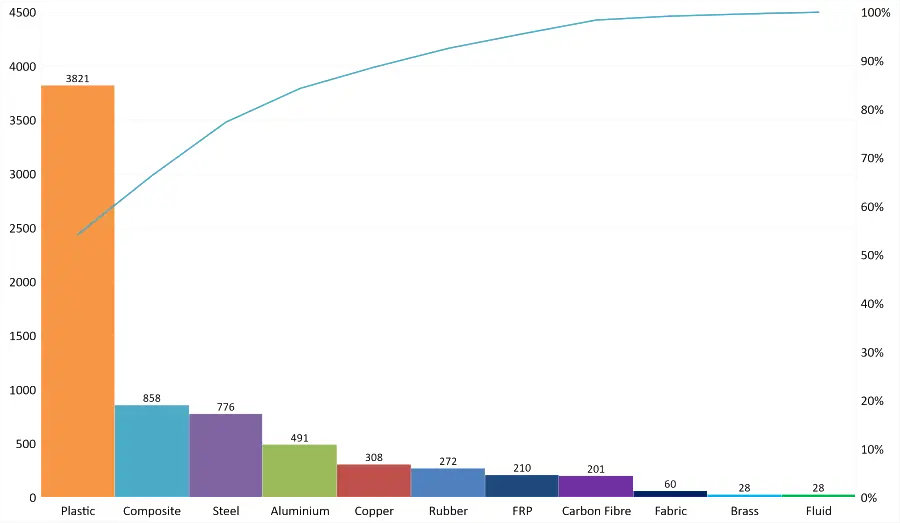
Material percentage present on components of the DJI Inspire Drone Inventory:
- Plastic: 53.1% (storage case and controller casing).
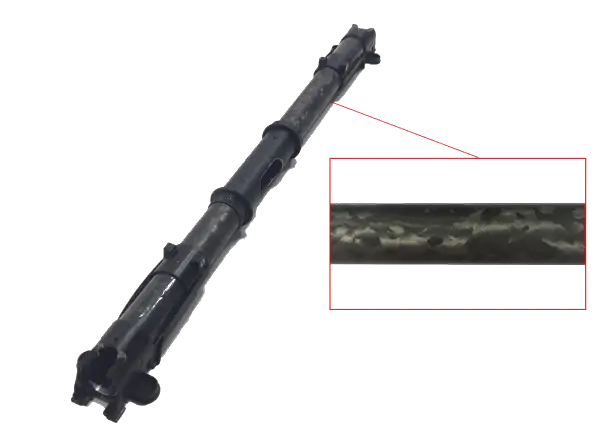
- Carbon Fiber (boom): 2.7%.
- Steel (fasteners): 10.7%.
- Composite (battery cell): 11.9%.
- FRP (PCBs, GPS antenna): 2.91%.
04Distribution Analysis
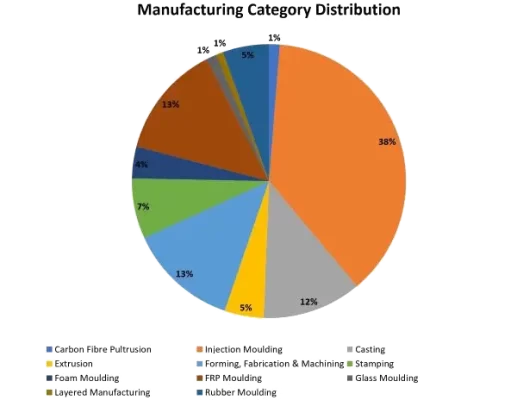
Manufacturing Category Distribution
Injection Moulding accounts for 38%. Carbon Fibre filament (boom rods): 1%. Forming, Fabrication and Machining combined: 13%. Stamping: 7% (heat dissipation sheets).
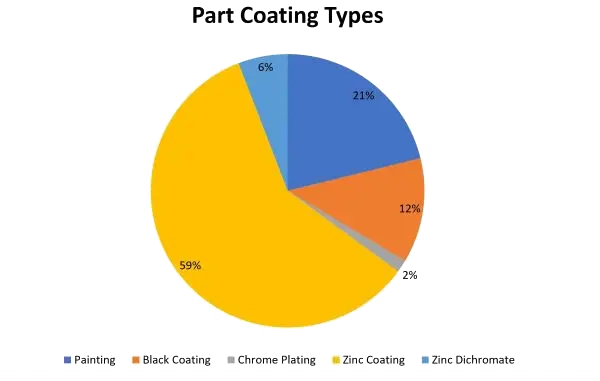
Part Coating Distribution
Zinc coating: 59% (fasteners). Black coating: 12%. Painted aluminium parts: 21%. Zinc dichromate (lockset parts): 6%.
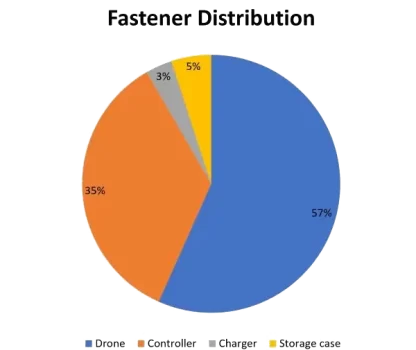
Fastener Distribution
Drone aircraft: 57%. Remote controller: 35%. Charger: 3%. Storage case: 5%.
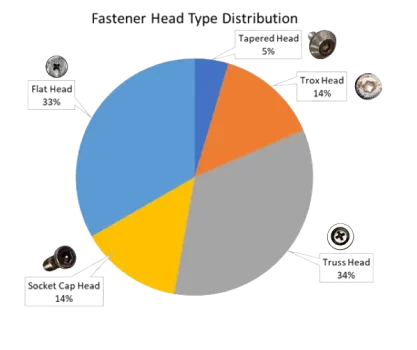
Bolt Head Type Distribution
Truss head: 34%. Flat head: 33%. Socket cap head and Torx head: 14% each.
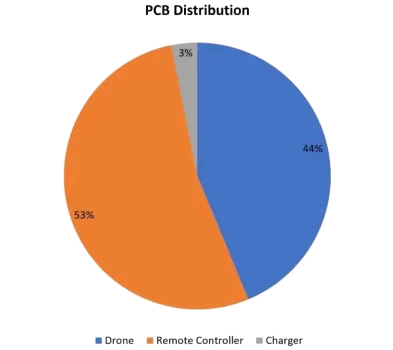
PCB Distribution
32 PCBs total. Remote Controller: 53%. Drone Aircraft: 44%.
05Architecture Study
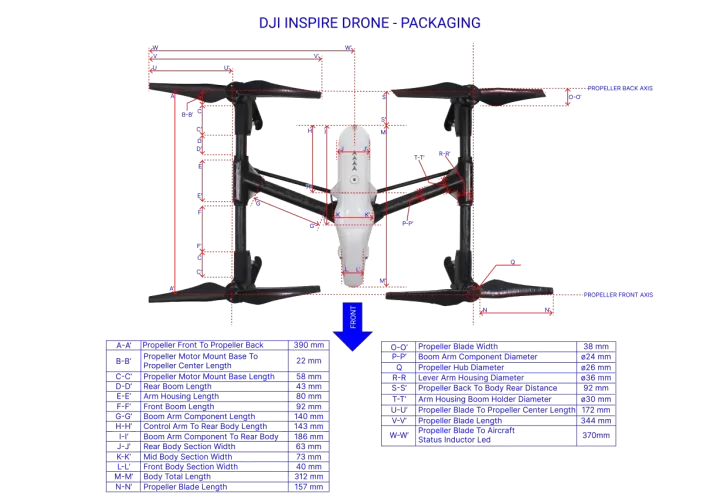
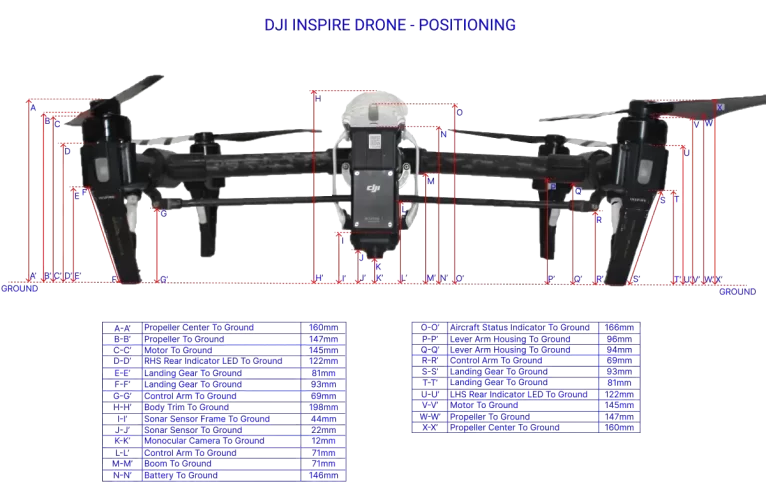
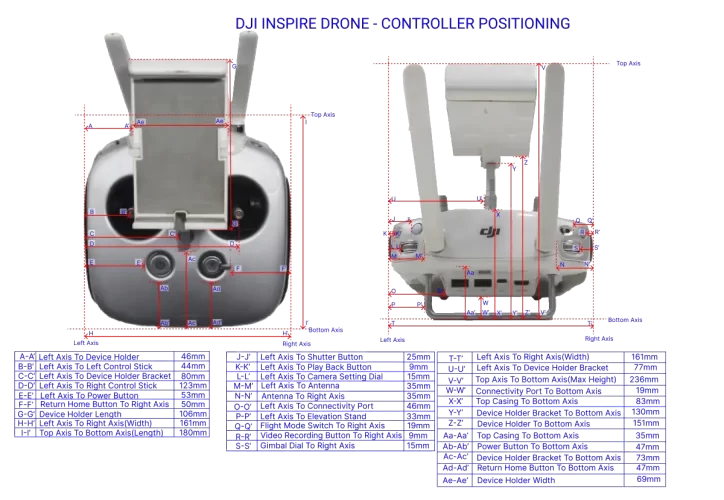
74 architecture diagrams were prepared categorized into Packaging, Positioning, Interface, and Functional Diagram.
Packaging Diagram
14 packaging diagrams captured in all orthographic views - propeller-to-propeller distance, motor shaft spacing, and critical design dimensions.
Positioning Diagram
20 positioning diagrams prepared - critical dimensions with reference to ground or reference plane.
Interface Diagram
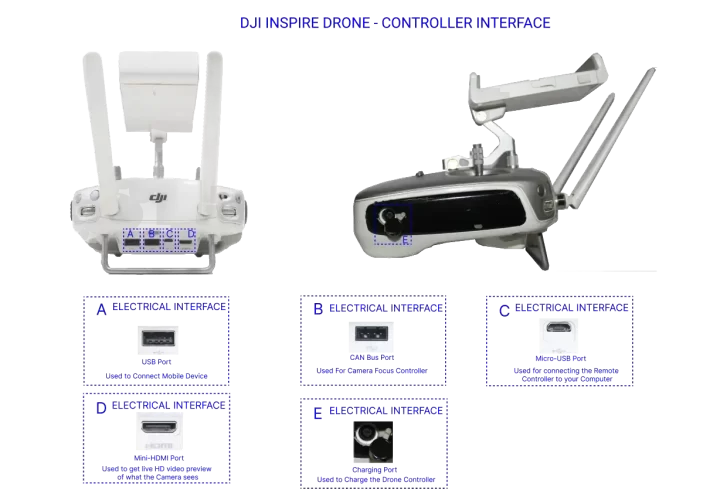
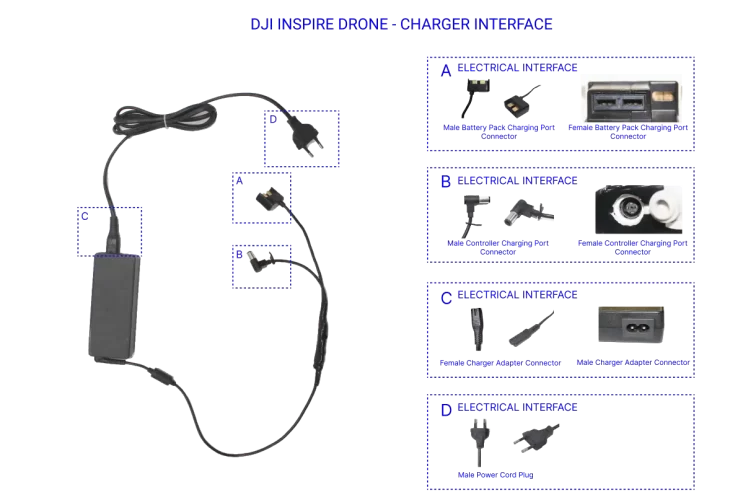
5 interface diagrams - battery-to-charger, controller-to-device connections, connector details.
Information Diagram
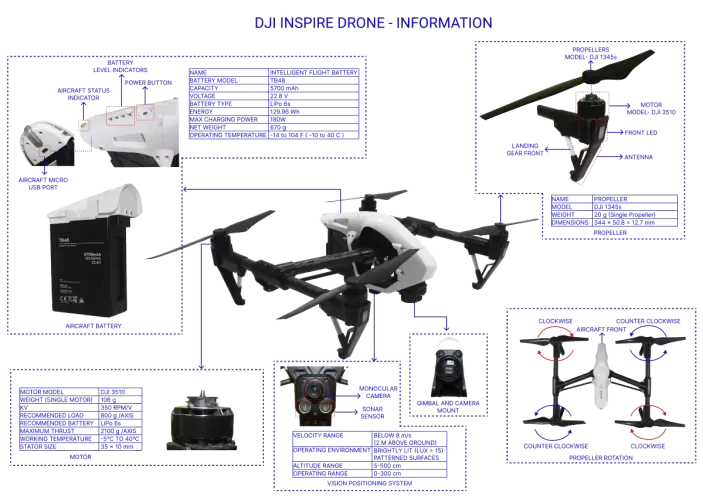
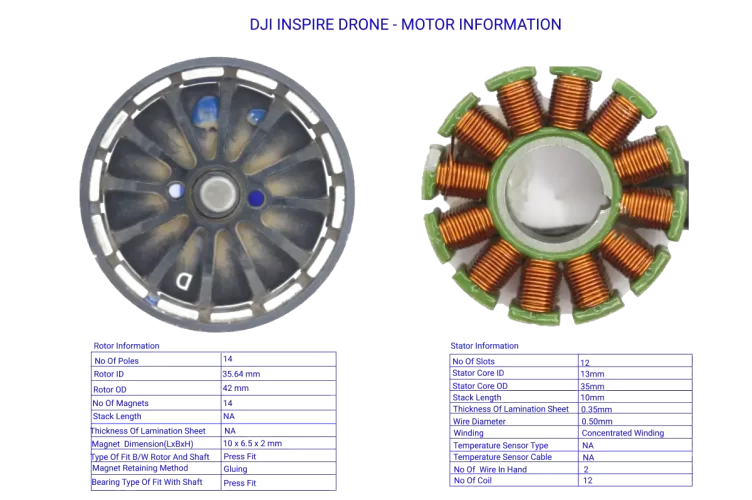
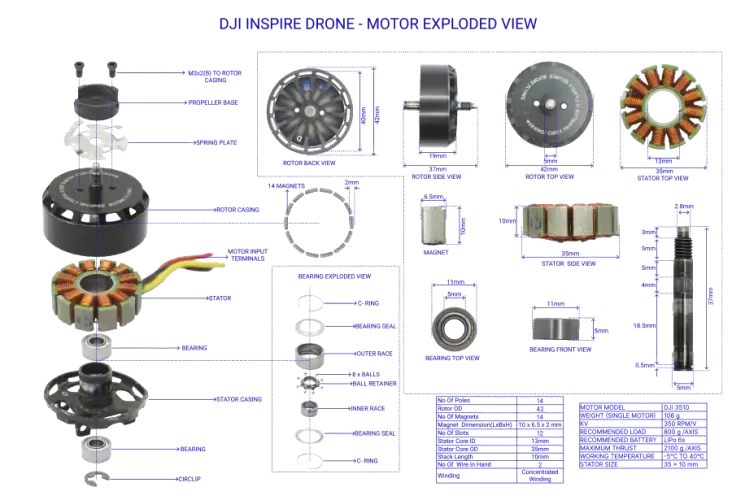
6 information diagrams - system design attributes, specification, motor design parameters.
Exploded Views
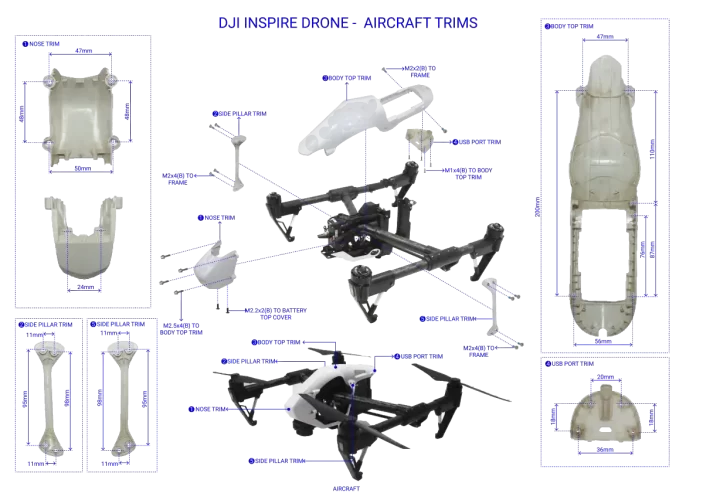
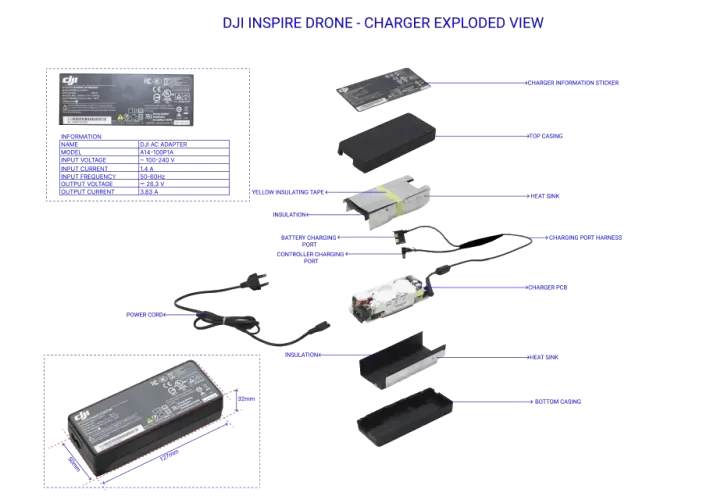
13 exploded view diagrams of drone, controller, storage case and charger.
06Interconnection & PCB
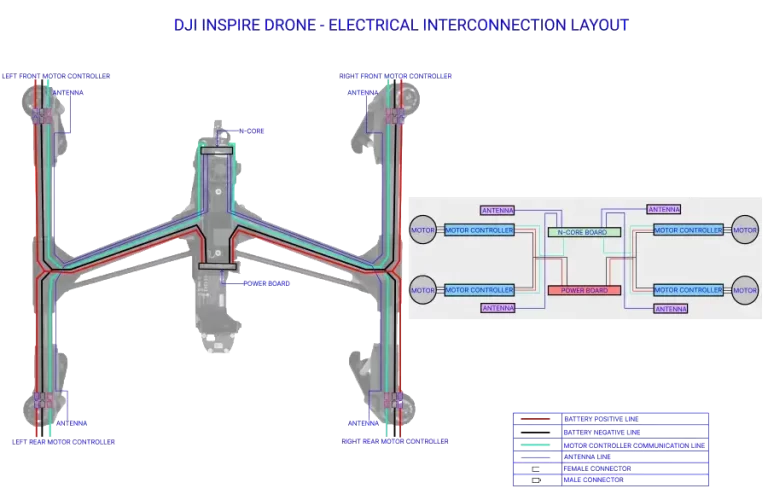
Interconnection Layout
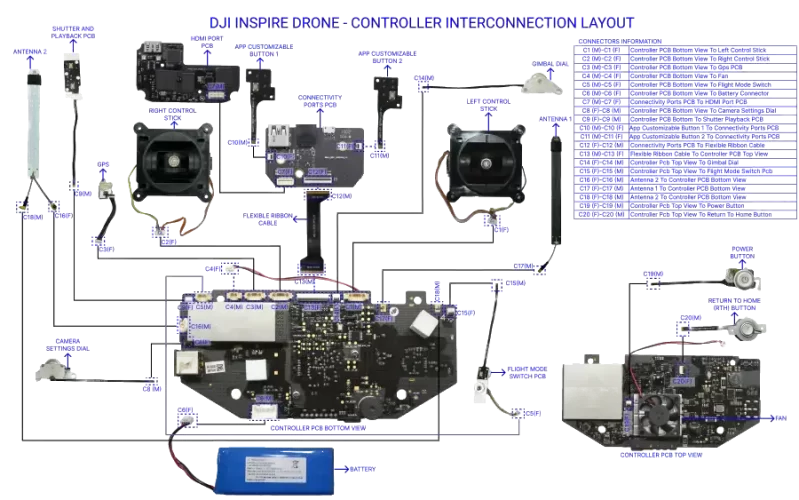
6 interconnection diagrams prepared for controller and drone - explaining electrical and electronic system connections.
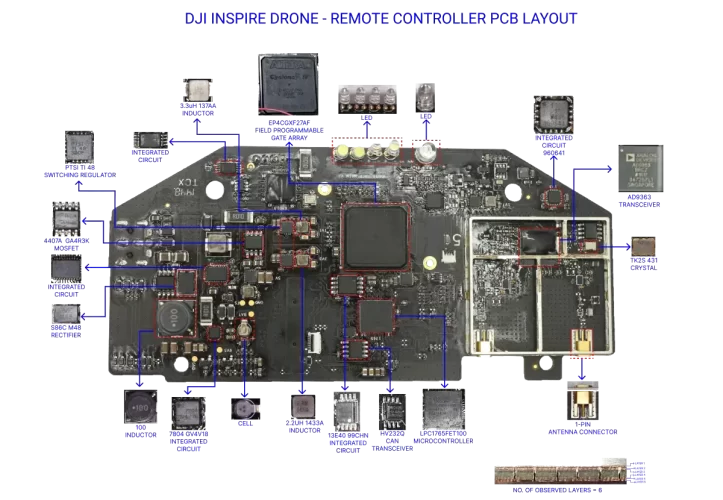
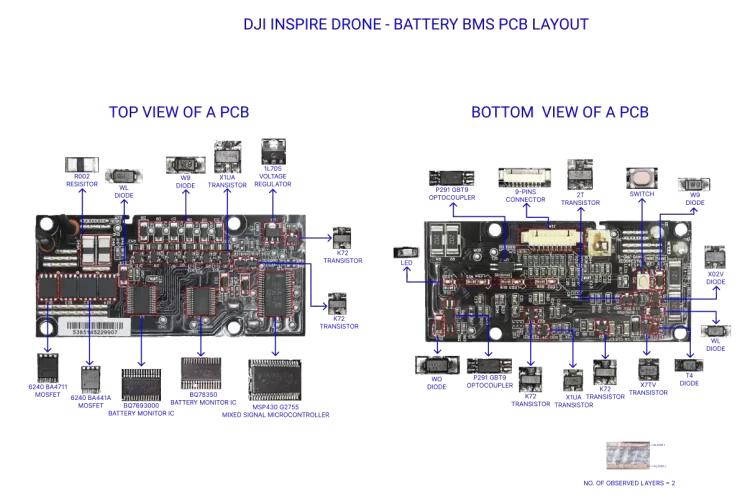
PCB Layouts
10 PCB layouts prepared - showing microcontrollers, ICs, connectors, and component placement.
07Should Cost Analysis
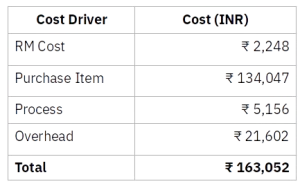
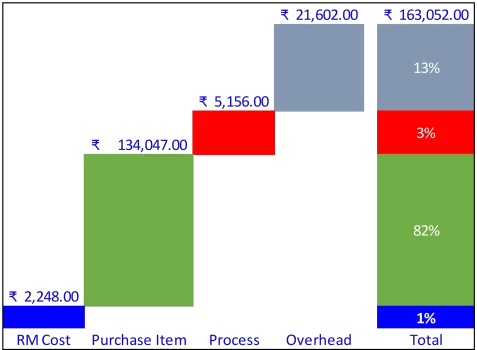
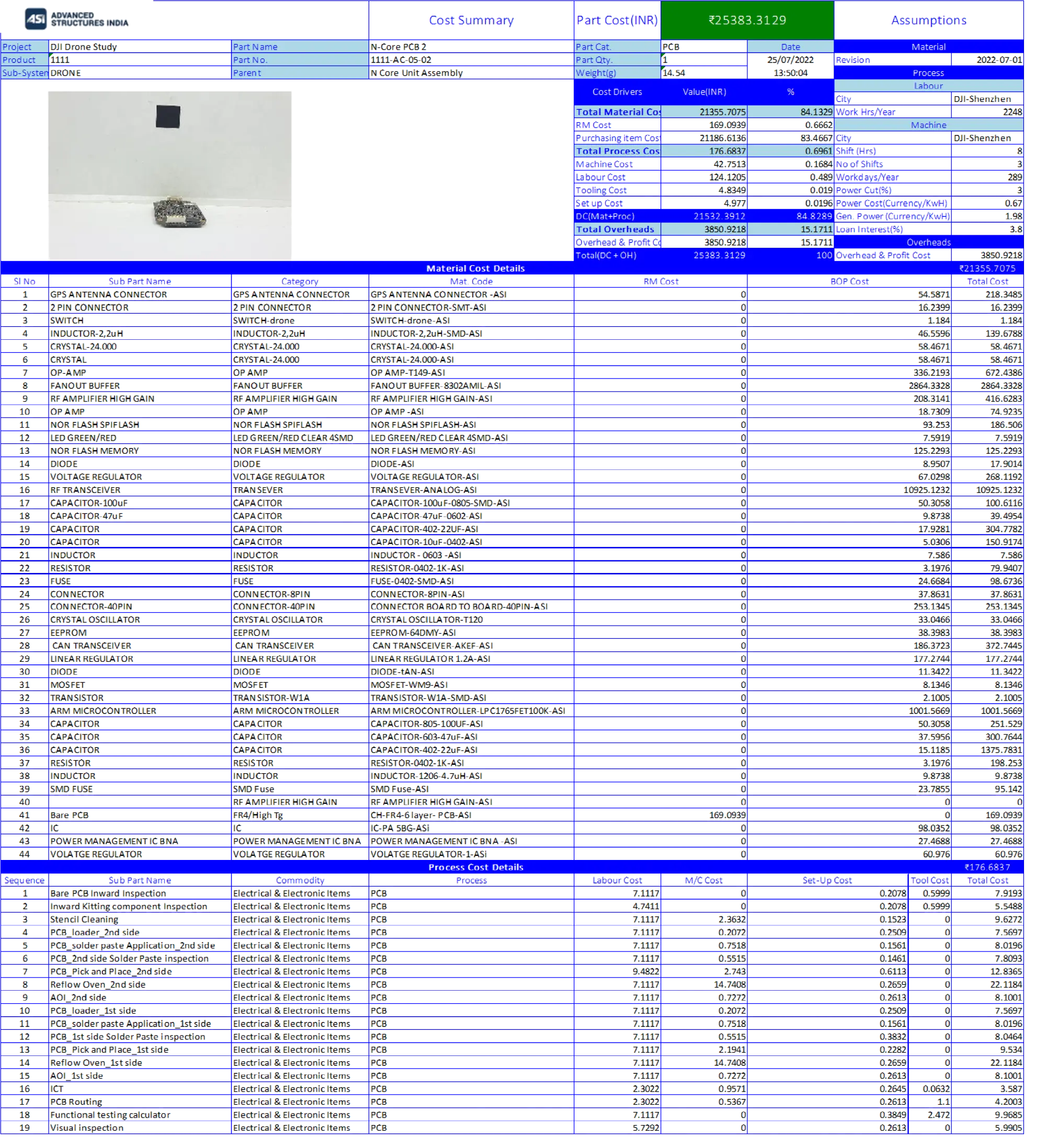
Manufacturing cost: ₹1,63,052 INR. Manufactured in China. Volumes: 25,000 annually. Material and MHR rates: Q2 FY22-23.
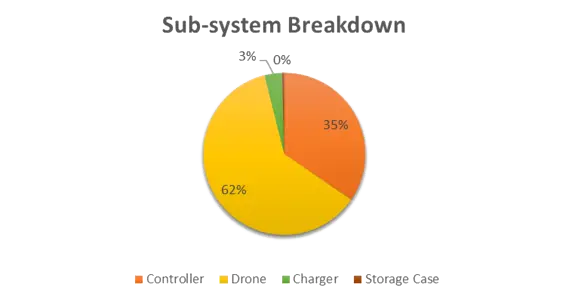
Total Cost Pareto
- 80% of cost is due to electrical & electronic components.
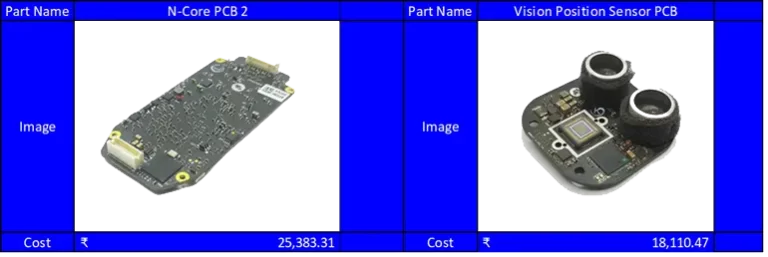
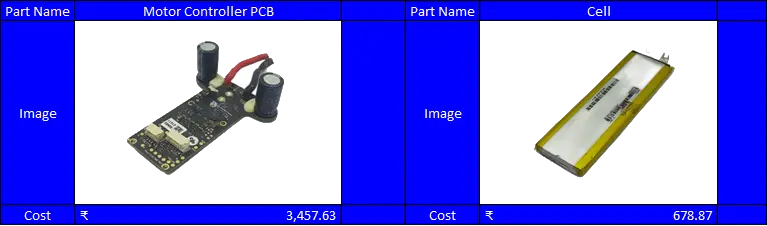
- Drone sub-assembly: 68% (vision sensors, transceiver, PCB, GPS antenna).
- Controller sub-assembly: 22% (data processing PCB, HDMI port PCB).
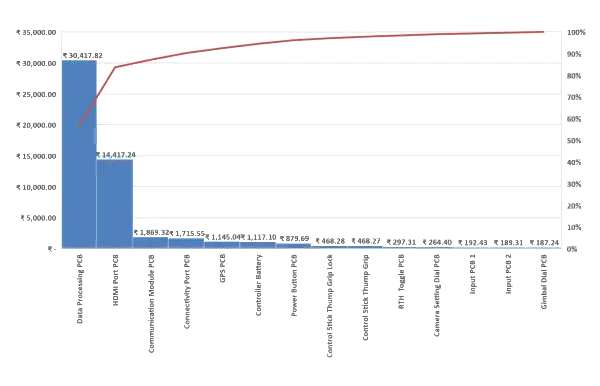
Subsystem Cost Breakdown
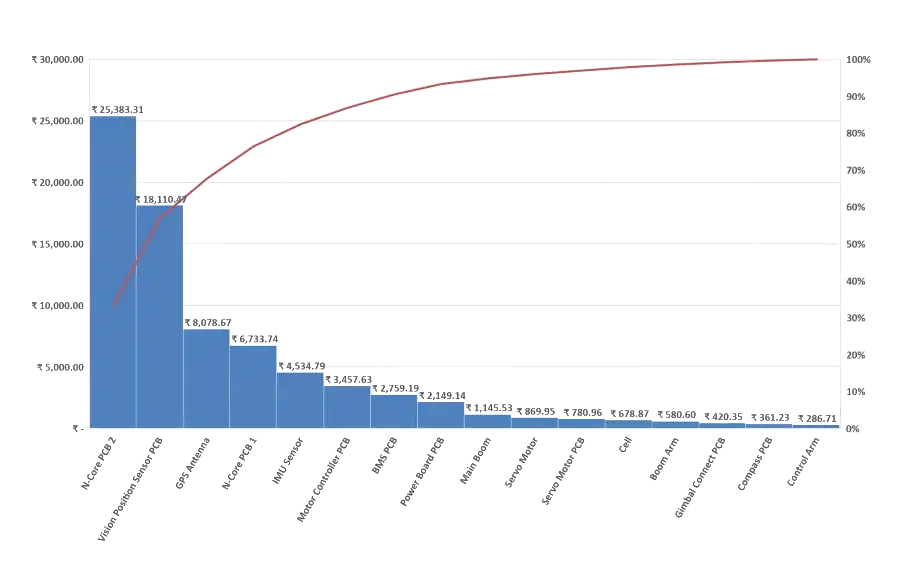
Drone Sub-Assembly Pareto
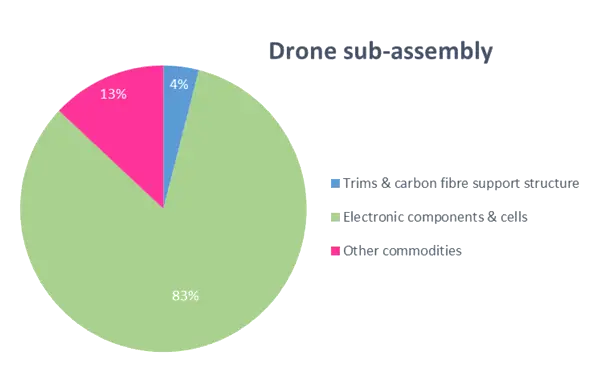
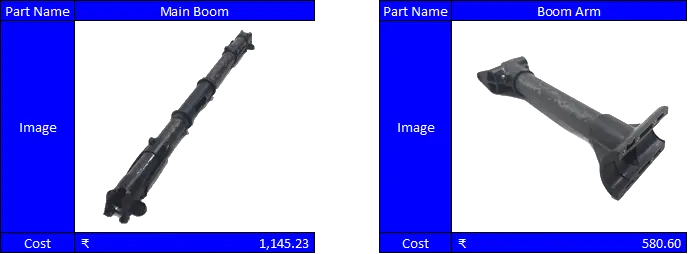
High-Cost Items
Material & Process Cost Summary
08Software Platforms