
Xiaomi Smart LED TV 43" Teardown, BOM & Should Cost Analysis Teardown & Cost Analysis
Comprehensive teardown and benchmarking of the Smart LED TV 43". 4 assemblies, 112 components, 9 PCBs analyzed with should-cost estimated at ?22,655.46.
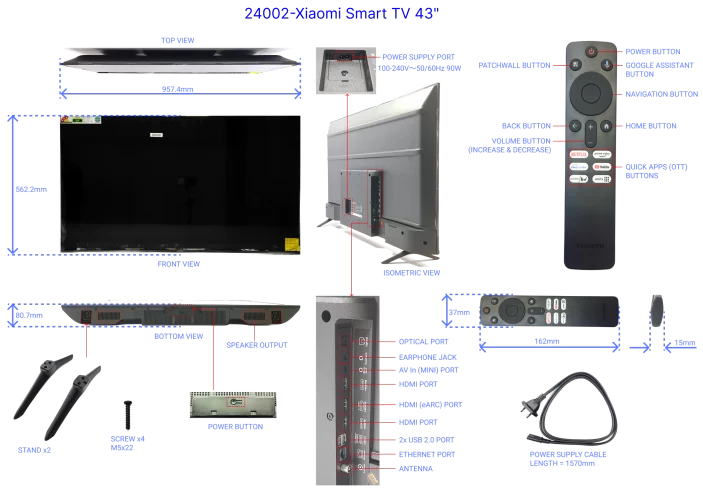
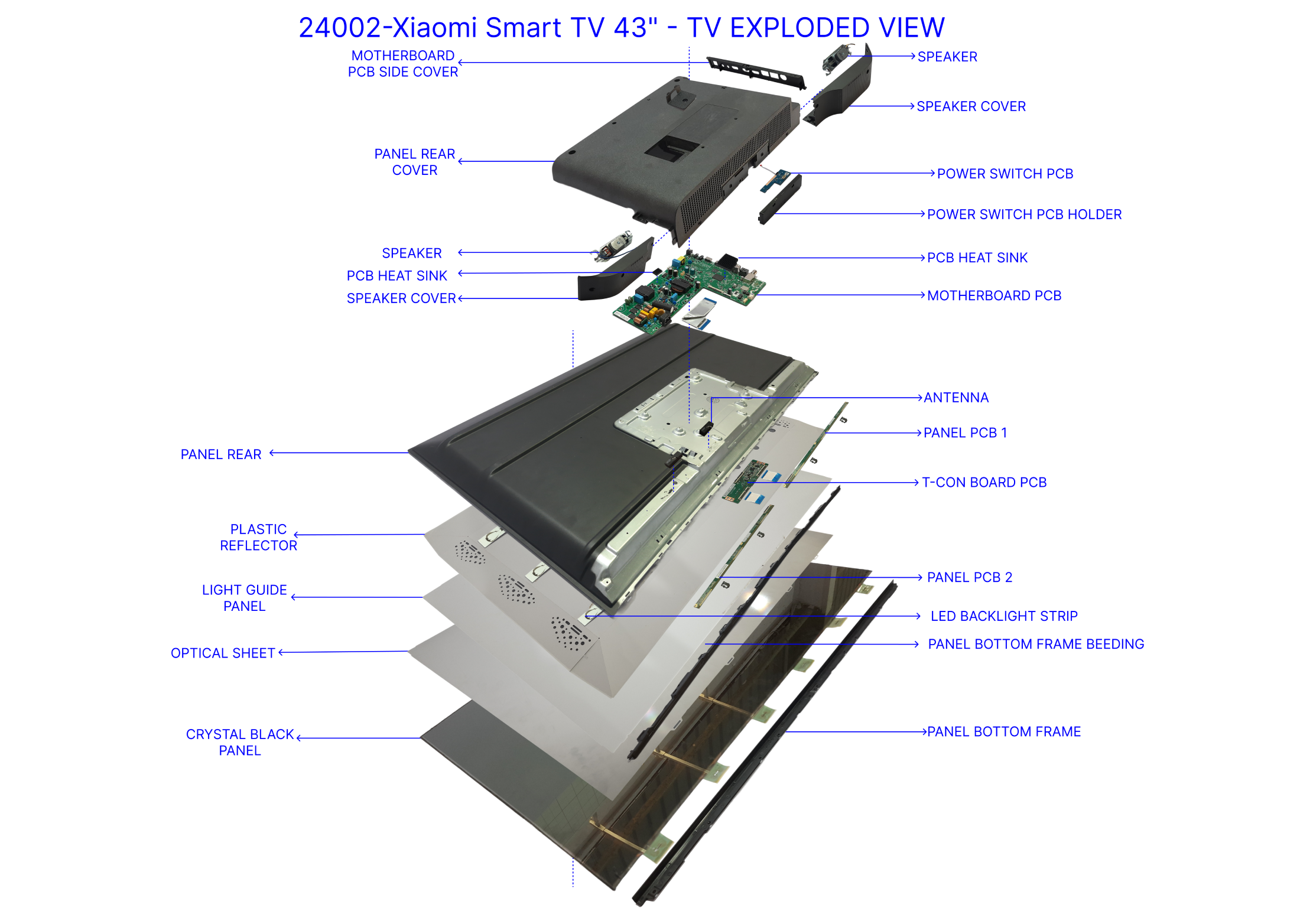
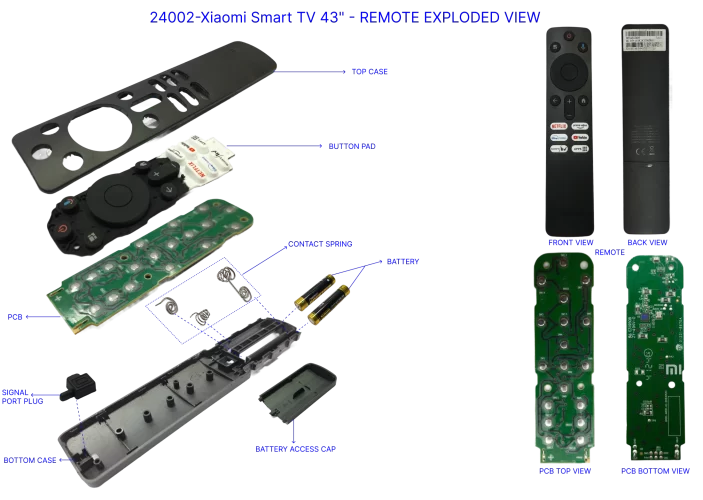
A comprehensive teardown and benchmarking of the Smart LED TV 43" was conducted, analyzing 43 features, specifications, and product-level details.
We recently estimated the should-cost for the Xiaomi Smart TV 43" at ?22,655.46 (excluding GST). PCBs contribute ?5,111.13 (22.57%) of the total cost, making them a significant cost driver.
4K UHD display (38402160), 94% DCI-P3, 1.07 billion colors, 60Hz + MEMC, 178 viewing angle, HDR10/HLG, 30W audio (215W), Dolby Audio/DTS:X, Google TV, Quad A55 CPU, Mali G52 MP2 GPU, 2GB RAM, 8GB storage.
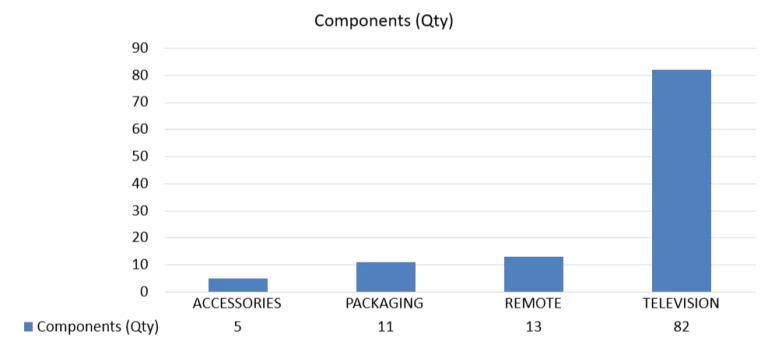
Multi-level BOM structure, 9 PCB teardowns with component counts, weight distribution analysis, manufacturing category distribution, component-level should cost analysis, and cost contribution analysis across accessories, packaging, remote, and television assembly.


01Features & Specifications
Prominent Features of Smart LED TV
Display Technology
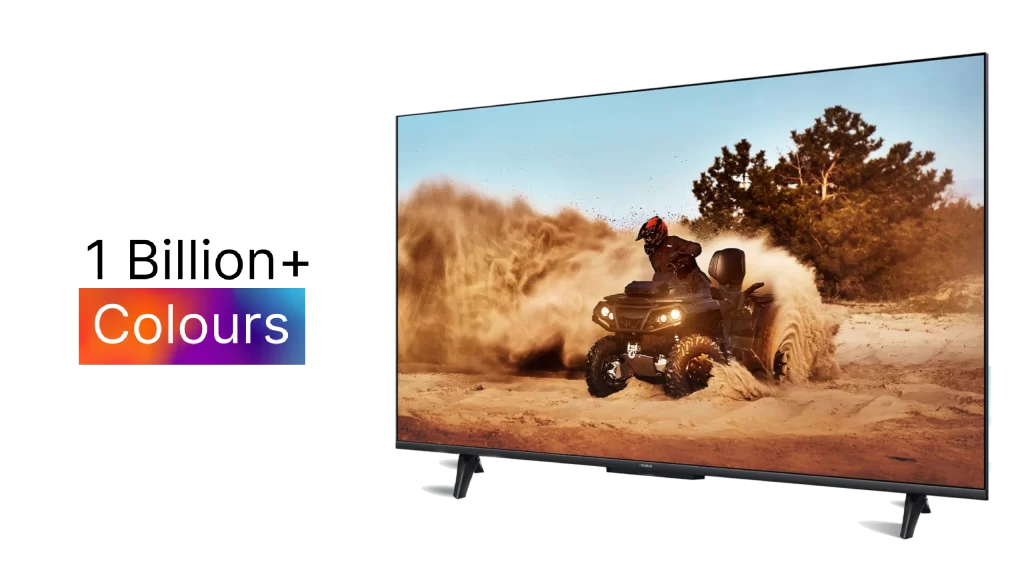
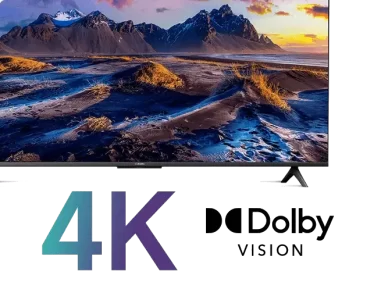
The Smart LED TV 43" has a 4K UHD display with a resolution of 3,840 2,160 pixels. The screen supports a wide color gamut, covering 94% of the DCI-P3 spectrum, and displays 1.07 billion colors. With a refresh rate of 60Hz and MEMC technology up to UHD 60Hz, it ensures smooth visuals. The viewing angle stands at 178 horizontally and vertically, providing consistent picture quality from various positions. Additionally, the TV supports HDR10 and HLG for enhanced dynamic range.
- Resolution: 4K UHD display with 3,840 2,160 resolution
- Color Gamut: Wide color gamut covering 94% of DCI-P3 spectrum
- Color Depth: 1.07 billion colors for vivid visuals
- Refresh Rate: 60Hz refresh rate with MEMC technology


Audio Performance
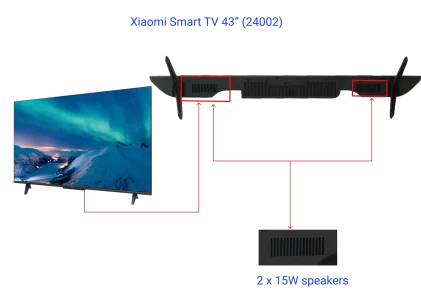
Equipped with two 15W speakers, the TV delivers a total sound output of 30W. It supports Dolby Audio, DTS:X, and DTS Virtual:X sound technologies, offering an immersive audio experience with clear dialogue and rich bass.
- Sound Output: 30W total sound output (2 15W speakers)
- Audio Technology: Dolby Audio, DTS:X, and DTS Virtual:X support
- Sound Quality: Clear dialogue and rich bass
Operating System & Processing
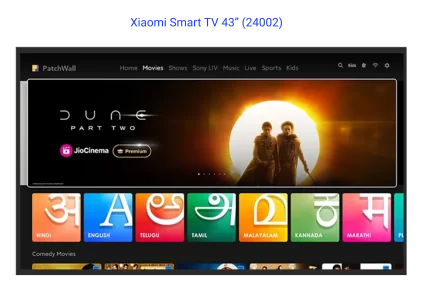
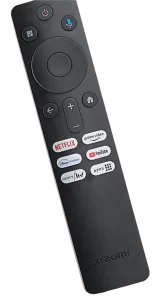
- Operating System: Google TV with access to apps like Netflix, Prime Video, and YouTube
- Voice Control: Built-in Google Assistant for voice control
- Streaming Support: Chromecast and Miracast support for easy streaming
- App Store: Google Play Store for downloading apps
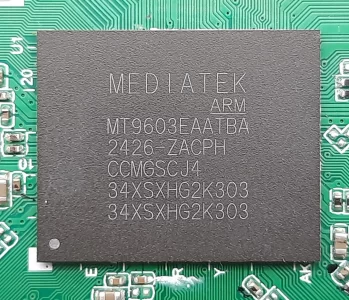
- Processor: Quad A55 CPU and Mali G52 MP2 GPU for smooth performance
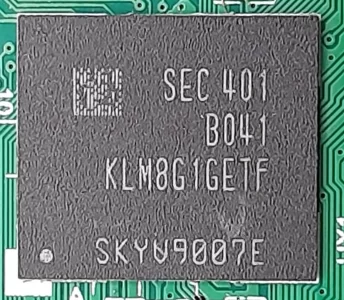
- Memory and Storage: 2GB RAM and 8GB internal storage
02BOM & Weight Analysis
Weight Distribution Overview
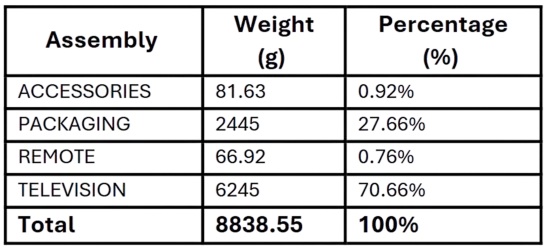
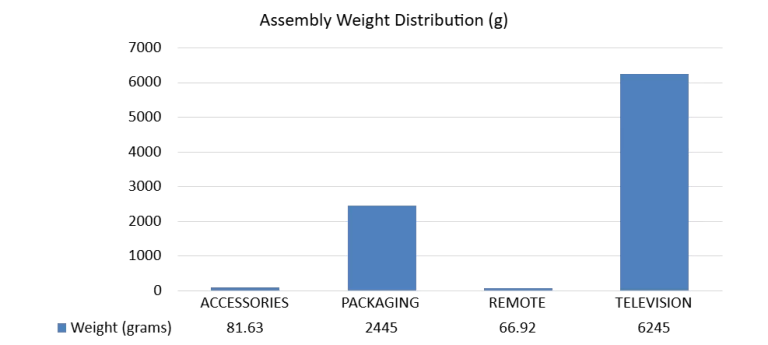
The teardown of the Smart LED TV 43" provided insights into the weight distribution across various assemblies, highlighting the contribution of key components. The television unit itself accounts for 70.66% of the total weight, comprising key functional elements such as the display panel, PCBs, and power supply. The packaging weight (27.66%) reflects the necessity of secure transit protection, while accessories and the remote contribute minimally to the overall weight.
Major Components Weight Contribution:
- Panel Rear: 2280g Forms a significant portion of the structural weight, providing support and protection
- Packaging (Outer Box): 1944g Essential for transportation safety
- Crystal Black Panel: 743g Major component in the display assembly
- Crystal Black Panel Inside Layer: 742g Works alongside the outer panel to enhance display performance
Manufacturing Category Distribution
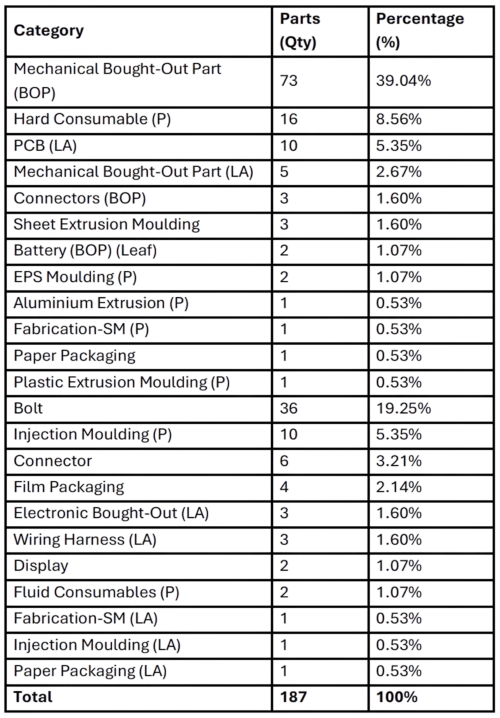
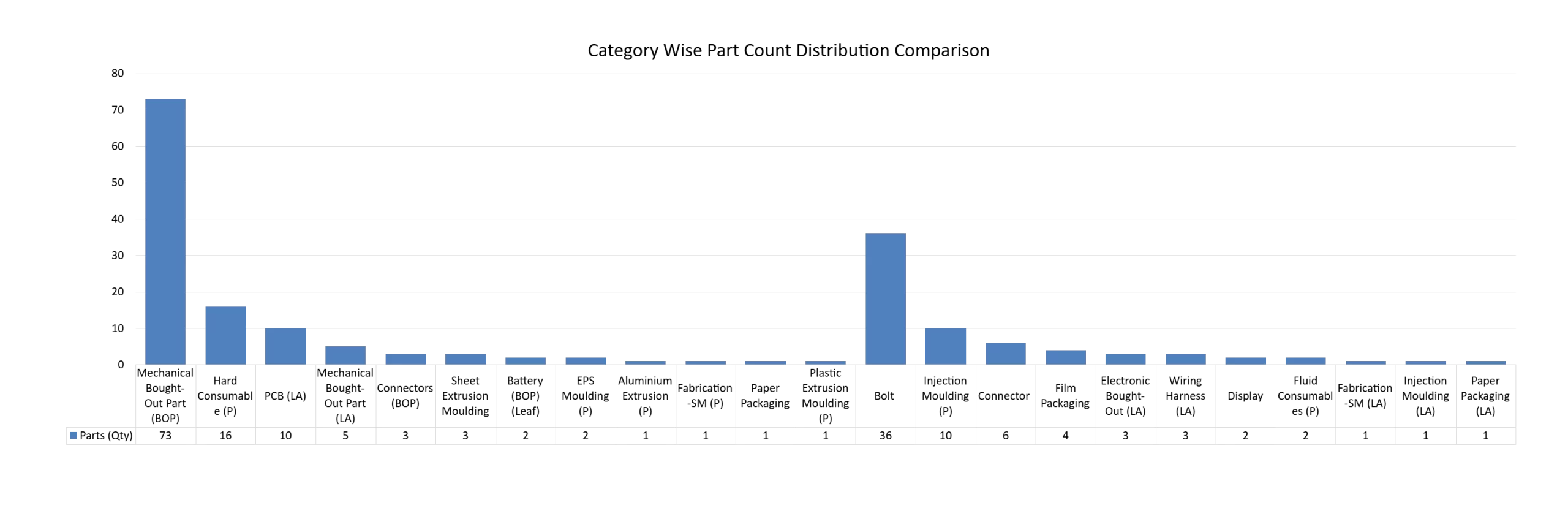
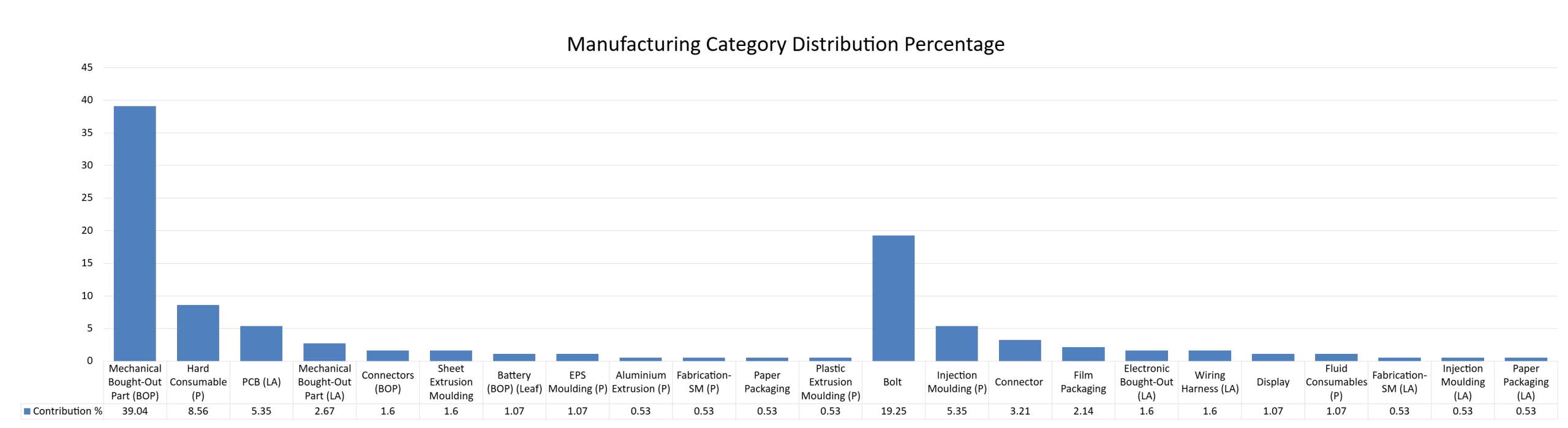
This category-wise distribution provides insights into the various materials and components used in the manufacturing of the Xiaomi Smart TV 43". The Mechanical Bought-Out Parts (BOP) (39.04%) form the largest segment, followed by bolts (19.25%) and hard consumables (8.56%). PCBs account for 5.35%, reflecting the electronic complexity of the device. The combination of moulding, fabrication, and packaging elements highlights the diverse manufacturing techniques used in assembling the television.
Smart LED TV Multi-level BOM (Bill of Materials) Structure
After the teardown, we used a Multi-level BOM (Bill of Materials) structure, which provides detailed insights into the main assemblies, their sub-assemblies, and individual components. This approach ensures a comprehensive analysis of the product's design, material composition, and functionality.
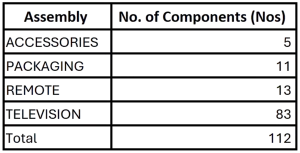
Total Assemblies and Components: After teardown, 4 assemblies and 112 components were identified in the Xiaomi Smart TV.
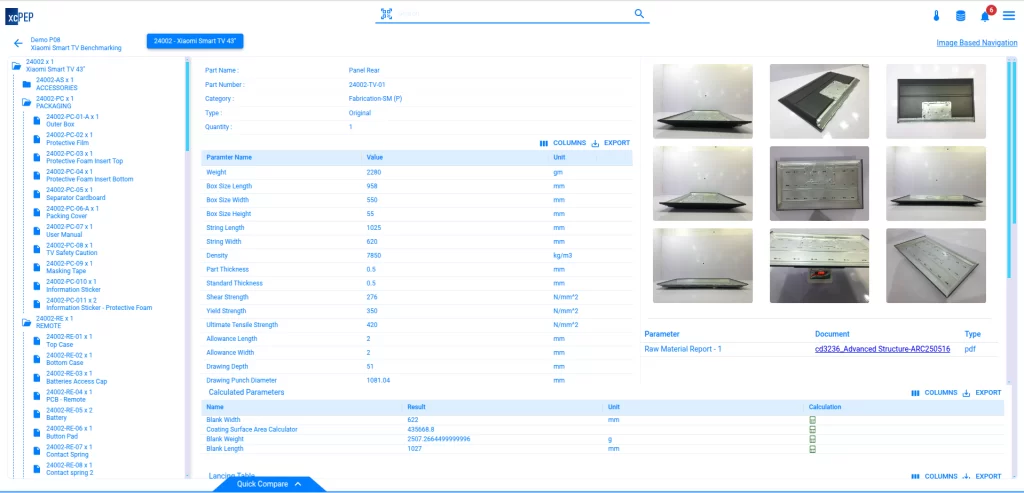
Component Parameters: Additionally, 40 BOM (Bill of Materials) parameters such as weight, dimensions, material type, electrical specifications, and thermal properties were mapped. On average, 20 parameters per part were recorded, depending on the complexity of the component.
03PCB Teardown
The Xiaomi Smart TV 43" is powered by an interconnected network of 9 printed circuit boards (PCBs), each designed for specific functionalities. These PCBs are meticulously engineered to provide efficient processing, signal transmission, power management, and user interface control.
T-CON PCB
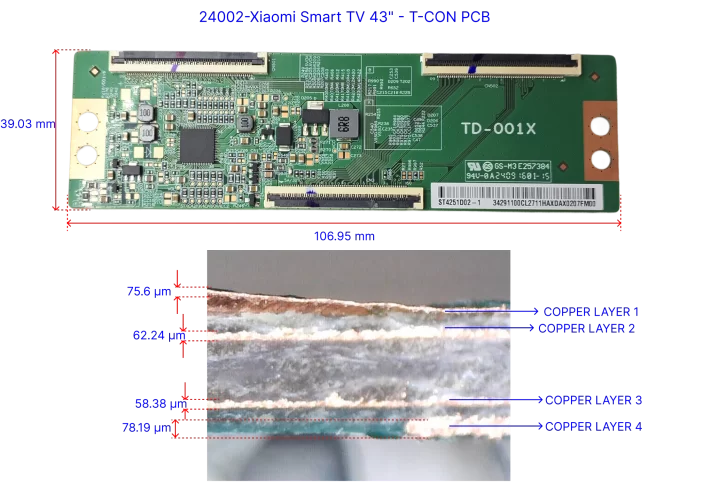
The Timing Controller PCB (T-CON) manages the display's refresh rate and color accuracy while ensuring stable signal transmission between the motherboard and the display panel through its connector. It contains various resistors, capacitors, and an IC crucial for display performance.
- Capacitor: 34
- Resistor: 69
- IC: 1
- Total Components: 119
- Copper Layers: 4
Motherboard PCB
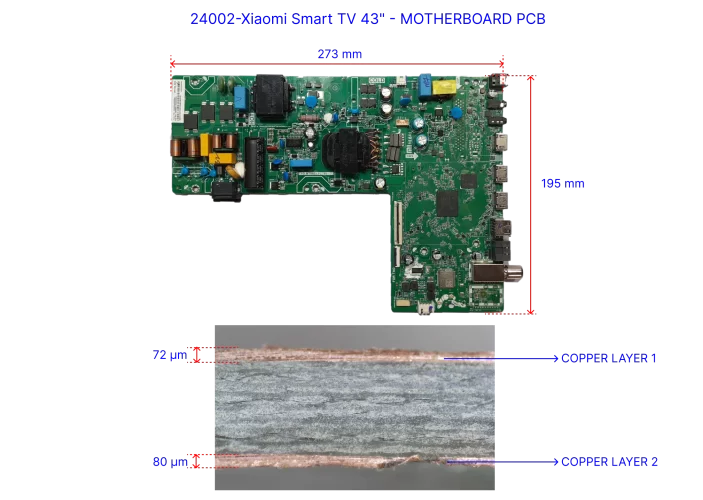
The motherboard is the primary processing hub, responsible for video rendering, connectivity, and overall system operations. It integrates essential components like an antenna connector, Wi-Fi & Bluetooth module, and multiple ICs for optimized performance.
- Capacitor: 160
- Resistor: 265
- IC: 9
- Total Components: 500
- Copper Layers: 2
It integrates multiple critical components that significantly impact performance and system reliability:
- Antenna Connector: Supports wireless signal reception and transmission
- IC: A processing unit essential for core system functions
- Transistor: Plays a role in power regulation and circuit stability
- Wi-Fi & Bluetooth Module: Enables seamless wireless communication
- Capacitor & Film Capacitor: Used for voltage regulation and noise filtering
- Connector FFC (20 Position & 60 Position): Ensures flexible and high-speed data transmission
- Jack Modular Connector 6P6C: Facilitates network and communication interfaces
Panel PCBs, Power Switch & LED Strip
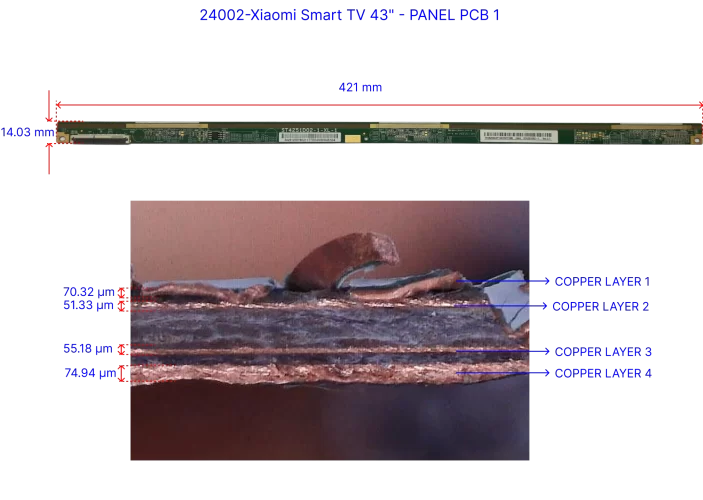
Panel PCB 1: Handles signal processing and synchronization to optimize image clarity and response time. It consists of multiple resistors, capacitors, and ICs that ensure efficient display communication. (Capacitor: 28, Resistor: 21, IC: 1, Total: 58, 4 Copper Layers)
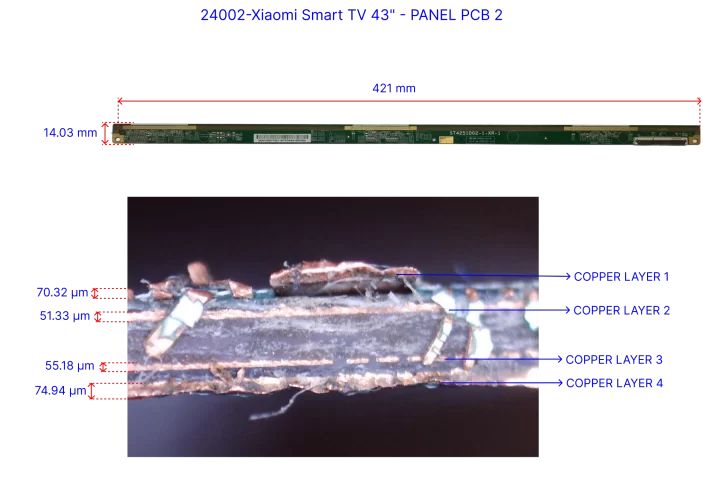
Panel PCB 2: Facilitates efficient data transmission between the mainboard and the display panel, ensuring smooth visual output. (Capacitor: 22, Resistor: 29, IC: 1, Total: 52, 4 Copper Layers)
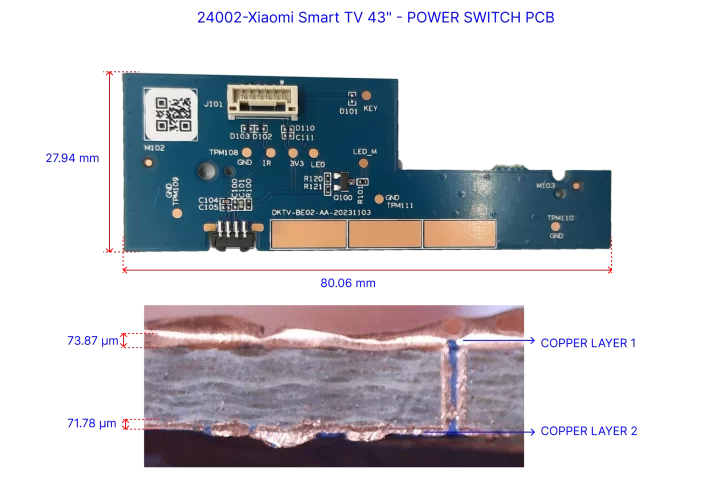
Power Switch PCB: Regulates power flow and ensures protection through controlled voltage distribution. (Capacitor: 2, Resistor: 4, Total: 11, 2 Copper Layers)
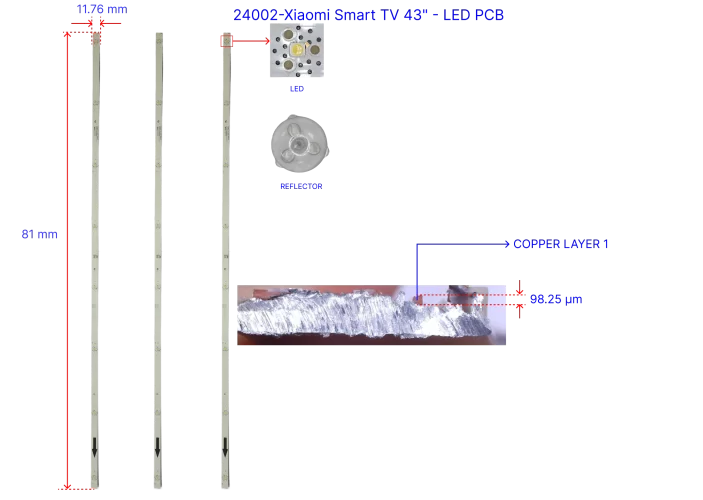
LED Strip PCBs (3 units): Integrated within the display panel to provide uniform backlighting and enhance brightness consistency. Each LED strip contains multiple LEDs and connectors for stable power distribution. (LED: 24, Connector: 3, Total: 27, 1 Copper Layer)
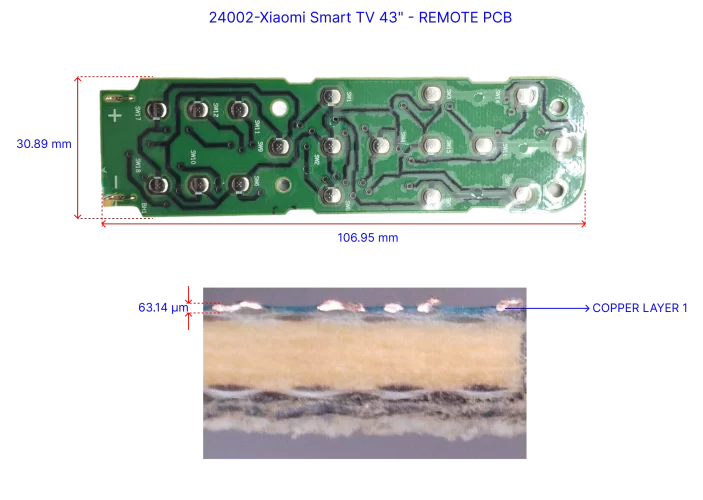
Remote PCB
Enables Bluetooth communication for seamless remote-control functionality, integrating essential circuitry for command transmission. The PCB is compact, designed to house all necessary components for signal processing.
- Capacitor: 16
- Resistor: 8
- IC: 1
- Total Components: 25
- Copper Layers: 1
04Should Cost Analysis
The Smart LED TV 43" was analyzed to estimate its manufacturing cost using a detailed should cost analysis approach. The study considered factors such as material costs, labor, production volumes, and component sourcing. Below are the key insights from the study:
- The television was manufactured in India
- The estimated production volume for the study was set at 50,000 units annually
- The latest material rates and labor cost benchmarks were taken for Q3 FY24-25
Cost Contribution: Accessories & Packaging
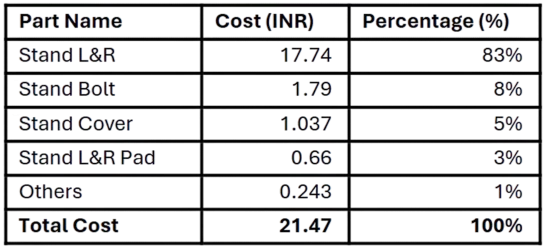
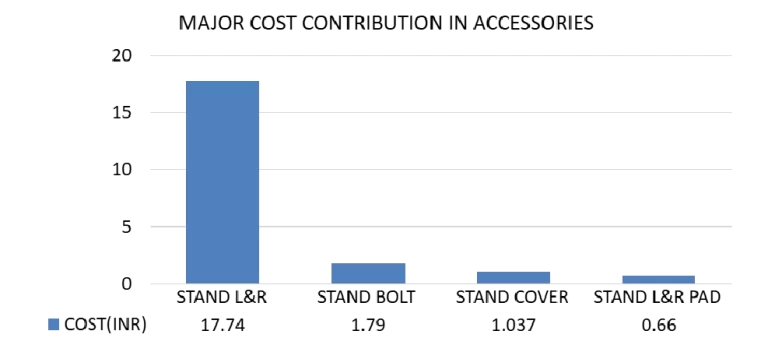
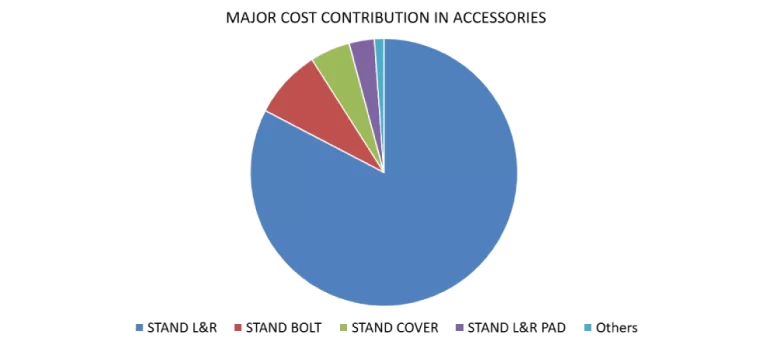
Accessories: The total cost of accessories amounts to ?21.47, contributing to essential components used in the television setup.
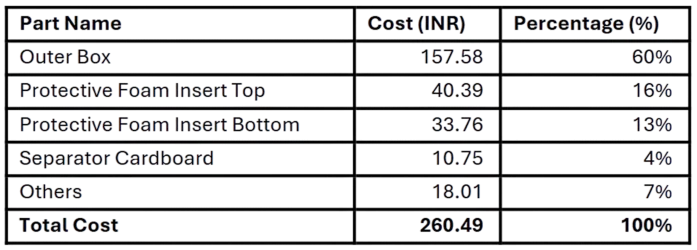
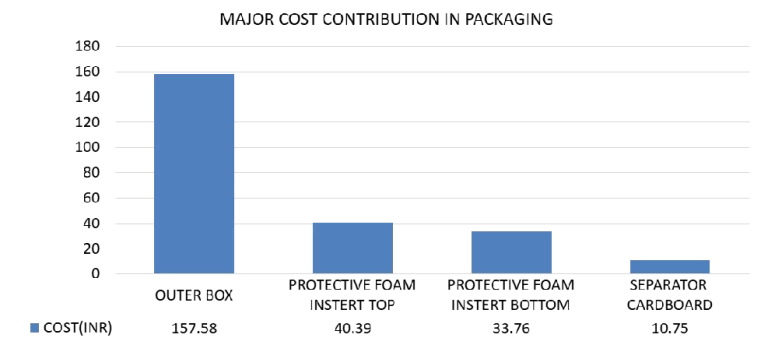
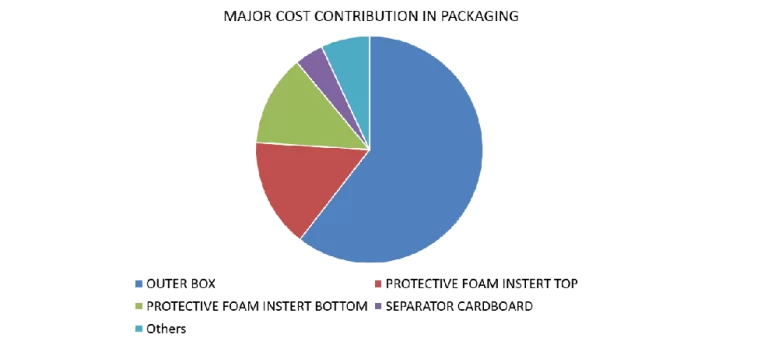
Packaging: The total cost of packaging stands at ?260.49, ensuring the safety and secure transportation of the television.
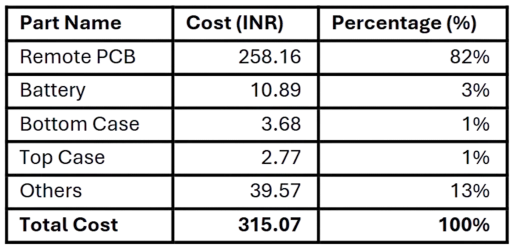
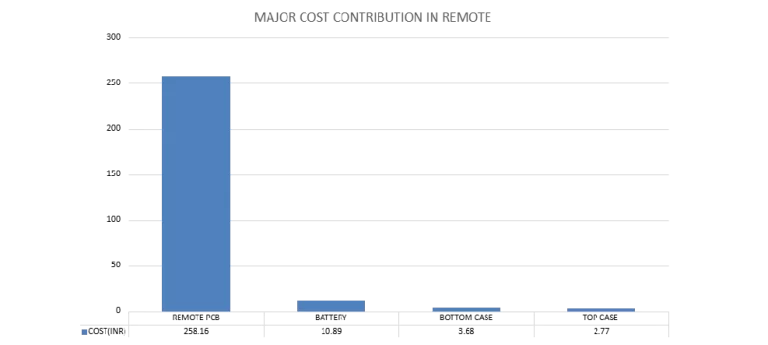
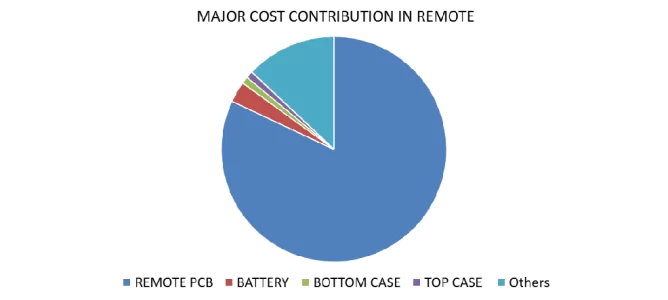
Remote: The total cost of the remote amounts to ?315.07, driven largely by electronic components.
Television Assembly Cost
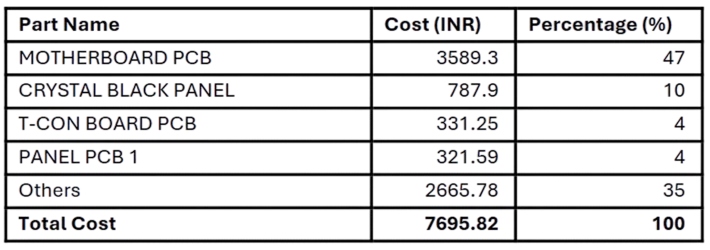
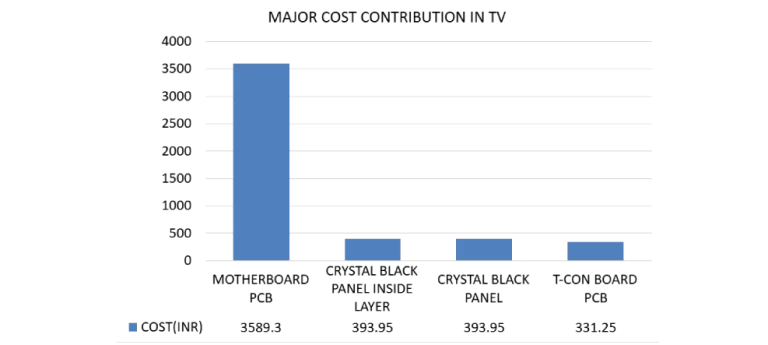
The television assembly constitutes the most significant portion of the total cost, amounting to ?7,695.82.
PCB Cost Analysis
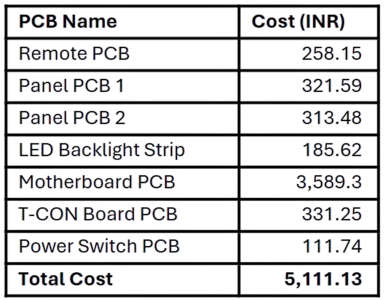
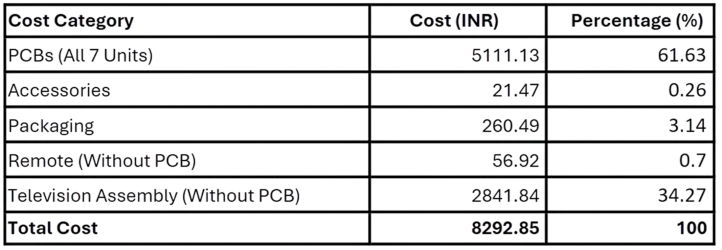
The total cost of all PCBs used in the Xiaomi Smart TV 43" amounts to ?5,111.13. To assess the impact of PCB costs relative to the total cost of the Xiaomi Smart TV 43", we compare the total PCB cost (?5,111.13) with the complete should cost of the television, including all assemblies (?8,292.85):
- PCBs contribute 61.65% of the total cost, highlighting their role as the most expensive subsystem
- Television assembly accounts for 92.80% of the total cost, indicating that internal electronics and display components dominate the pricing
- Packaging, remote, and accessories together contribute 7.2%, showing a relatively smaller cost impact
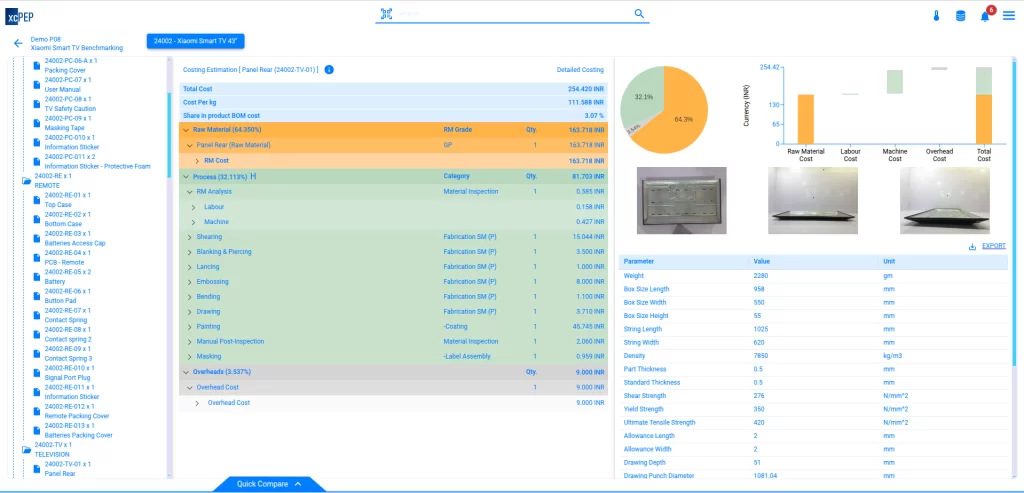
The above image shows the Should-Cost of the Panel Rear in xcPEP software.
Final Should-Cost Summary and Key Observations for Smart LED TV
We recently estimated the should-cost for the Xiaomi Smart TV 43" at ?22,655.46 (excluding GST). This estimation is based on a detailed breakdown of component costs across different assemblies, including PCBs, television assembly, packaging, accessories, and remote.
Smart LED TV Should-Cost Analysis: Key Takeaways
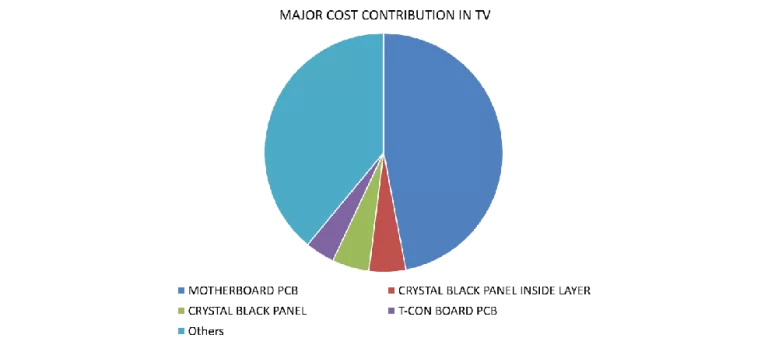
- PCBs contribute ?5,111.13 (22.57%) of the total cost, making them a significant cost driver. Optimizing PCB sourcing and design could yield substantial cost savings.
- The Motherboard PCB alone costs ?3,589.3 (15.85%), making it the most expensive individual component. It remains a key focus for cost reduction and supply chain efficiency.
- Display and Panel Components (?787.9, 3.48%) are critical for manufacturing but contribute a smaller share of the total cost compared to PCBs.
- Packaging (?260.49, 1.15%) and Accessories (?21.47, 0.09%) account for minimal cost impact, with limited scope for cost-saving measures.
- The remote (?315.07, 1.39%), while a small portion of the total cost, remains necessary for product usability.
Final Takeaway: The top three cost-driving components (Motherboard PCB, Display Panels, and Other PCBs) collectively account for over 42% of the total cost. Focusing on cost optimizations in PCB sourcing, display panel procurement, and motherboard cost reductions could significantly improve profitability while maintaining competitive pricing.
Software Platforms Used
Should Cost Software
xcPEP delivers real-world accurate, transparent and defensible should cost analysis of mechanical, electrical and electronics components from drawings or physical parts.
Explore xcPEP →
Should CostData
xcPROC is the centralized database engine powering xcPEP. Each database is meticulously curated by a dedicated data research team to be region-specific and time-specific.
Explore xcPROC →