
Omron BP Monitor HEM-7120 Teardown, BOM & Cost Analysis
Detailed teardown and Bill of Materials (BOM) analysis of the Omron HEM-7120 digital blood pressure monitor. Understand manufacturing costs and product design insights.
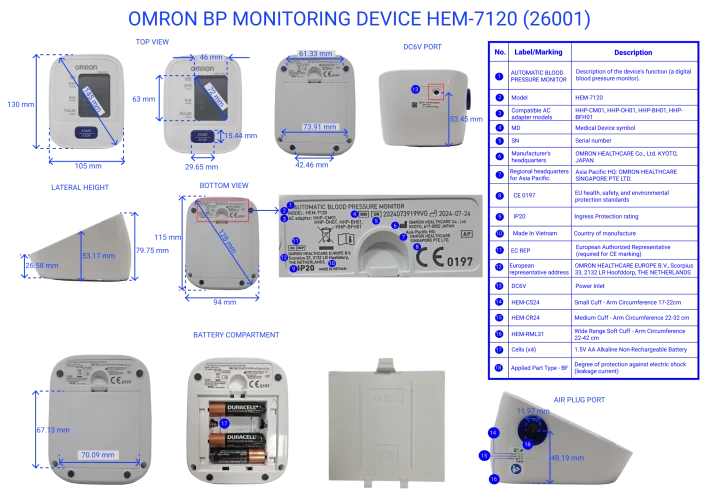
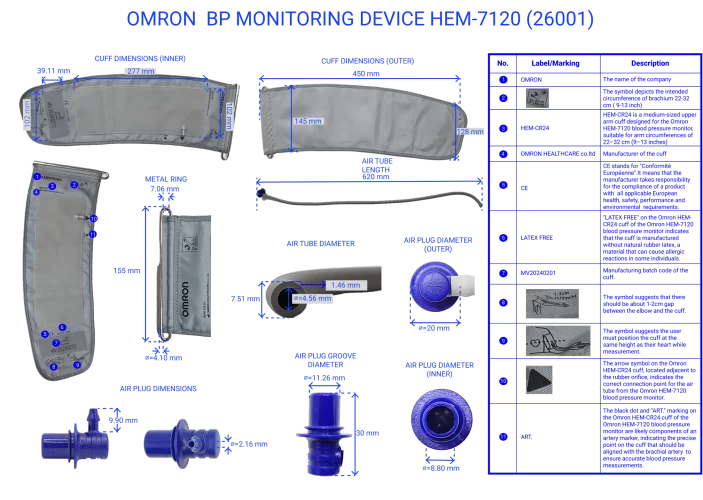
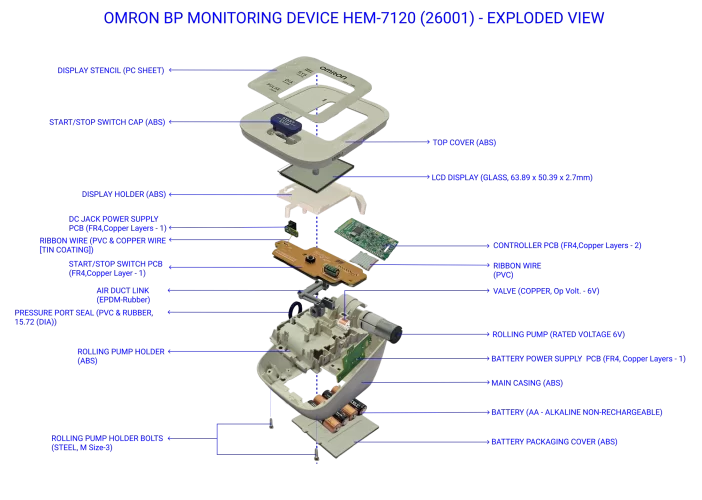
A detailed teardown and benchmarking of the Omron HEM-7120 upper arm blood pressure monitor. Mapped features, specifications, working principle, BOM structure and should cost analysis.
To demonstrate xcPEP platform capabilities in medical device cost analysis and provide insights for cost optimization in blood pressure monitoring devices.
Omron HEM-7120 upper arm blood pressure monitor with IntelliSense technology, oscillometric measurement method, and cuff wrapping guide indicator.
Product features. Error indicators. Working principle (pressurization & depressurization). BOM with weight and manufacturing analysis. Should cost breakdown at INR 1277.


01Product Overview
Features & Specifications
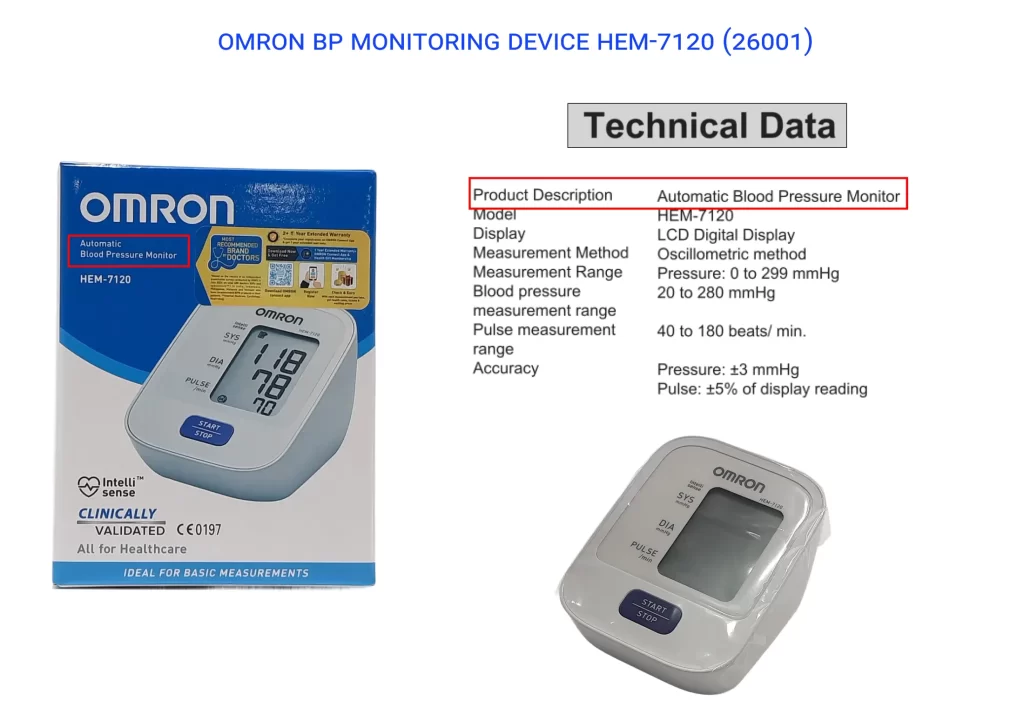
A detailed teardown and benchmarking of the Omron HEM-7120 Blood Pressure Monitor was conducted, mapping key features, specifications, and information at the product level. Below are some of its prominent features.
This Omron digital blood pressure monitor uses the oscillometric method of blood pressure measurement. This technique senses the movement of blood through the brachial artery and converts the movements into a digital reading. This measurement technique has been proving its relevance for over 30 years. The Omron HEM-7120 BP monitor features IntelliSense technology that applies the right amount of pressure for a quick and comfortable measurement. It has a cuff wrapping guide indicator that shows if the cuff has been wrapped properly. It can detect irregular heartbeats during the measurement and has a memory function. It stores up to 30 readings for one user.
Error Indicators
The Omron HEM-7120 can display three different error indicators to help users identify issues during operation:
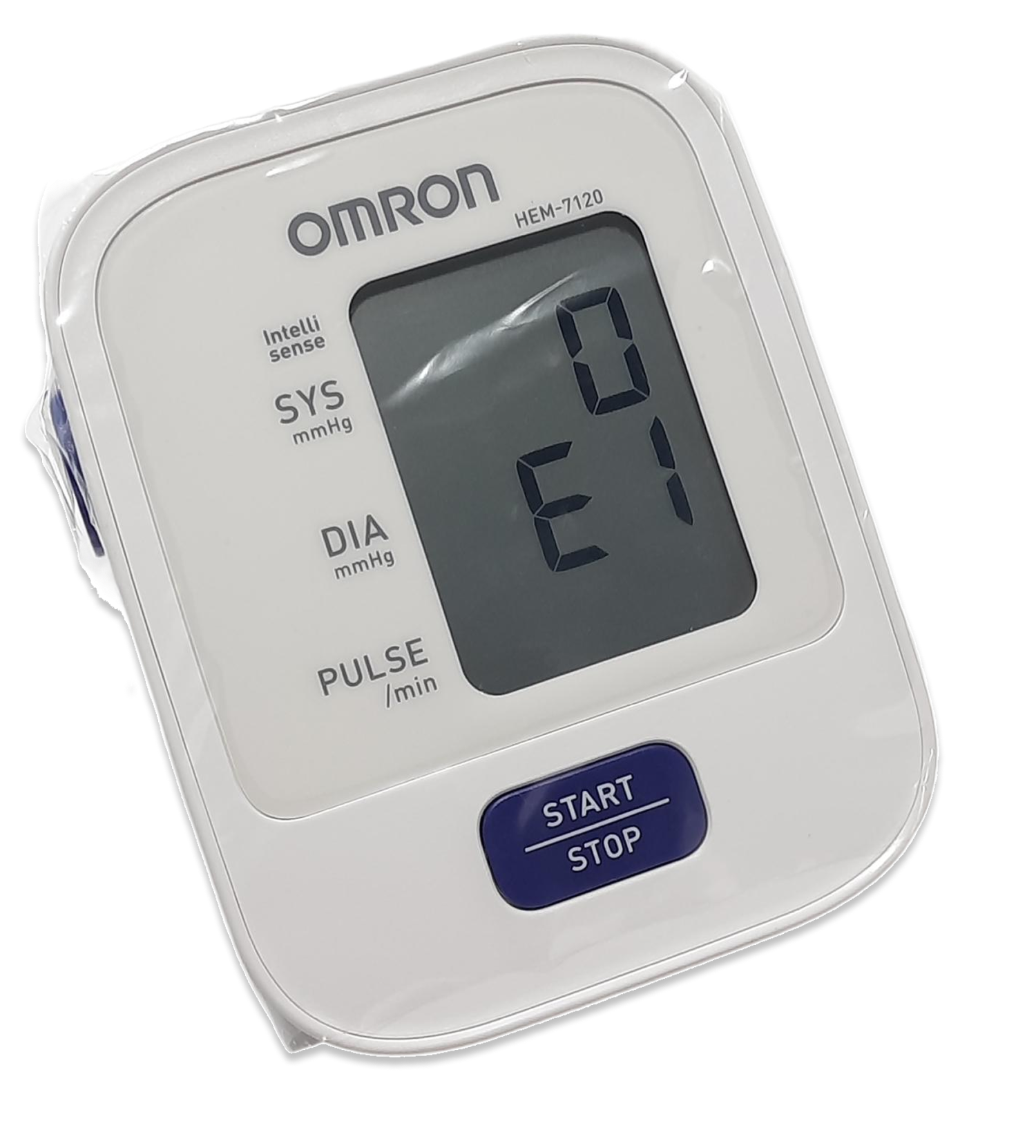
E1 Cuff Not Detected
The E1 error code will be displayed when the cuff is not wrapped properly around the arm. This indicates the device was unable to detect sufficient pressure from the cuff. Re-wrap the cuff snugly and retry.
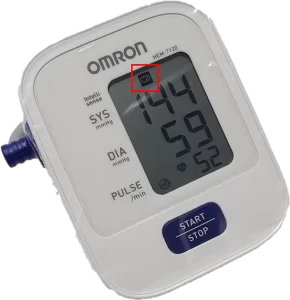
E2 Movement During Measurement
The E2 error code will be displayed when there is movement detected during the measurement. Excessive arm movement or talking during the reading causes inaccuracy. Remain still and silent during the measurement process.
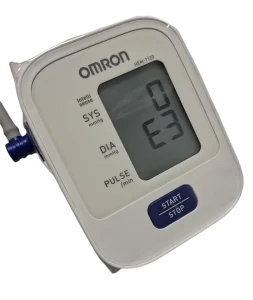
E3 Inflation Failure
The E3 error code will be displayed when the monitor fails to inflate appropriately. It could indicate that the cuff tube is bent or the cuff is too loose. Ensure the air tube is not kinked and the cuff is properly connected.
02Technical Analysis
Measurement Accuracy
The OMRON HEM-7120 leverages the oscillometric measurement method, which is widely used in automated blood pressure monitors. This method detects oscillations caused by blood flowing through the arteries and converts them into blood pressure readings.
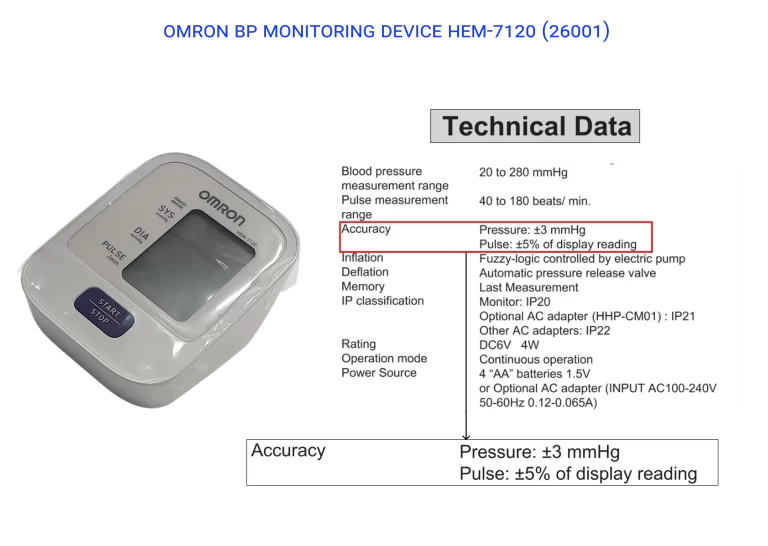
The oscillometric principle involves sensing the pressure changes in the cuff and analyzing the data to compute systolic, diastolic, and pulse readings. These pressure changes are picked up by a highly sensitive pressure sensor within the device. Omron states that this device measures blood pressure with clinical grade accuracy within ±3 mmHg for pressure and ±5% for pulse rate.
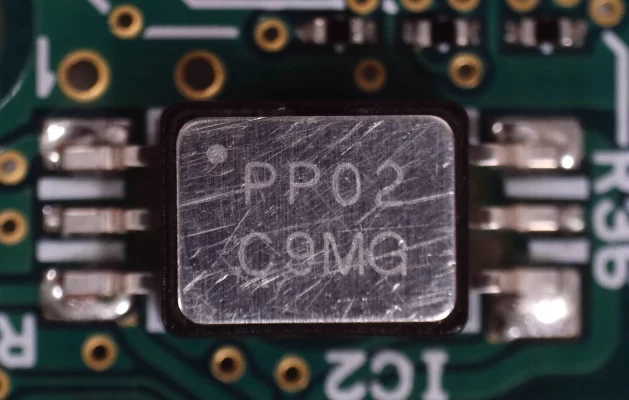
Piezoresistive Pressure Sensor
The core of the system is the piezoresistive pressure sensor. This type of sensor uses a thin semiconductor diaphragm with integrated resistive elements. As the pressure from the cuff changes, the diaphragm deforms, changing the resistance of the elements. This change in resistance alters a voltage signal, which is then processed by the analog-to-digital converter (ADC) and microcontroller.
Piezoresistive sensors are preferred in this application due to their high accuracy, rapid response, and reliability for measuring low-level biological pressures. Omron's IntelliSense technology further leverages this sensor to determine optimal cuff inflation for each individual, reducing discomfort and measurement time.
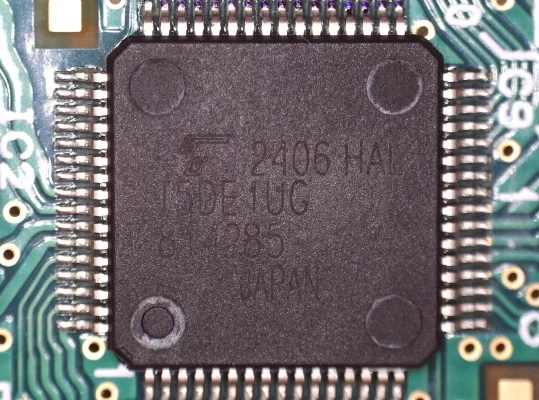
Microcontroller & Signal Processing
The Omron HEM-7120 uses a dedicated microcontroller to handle signal acquisition, processing, and display output. The MCU receives the analog signal from the pressure sensor, digitizes it, and applies Omron's proprietary algorithms to extract the systolic and diastolic pressure values along with heart rate. The MCU also manages peripheral functions including the LCD display, memory storage of readings, error detection, and the motor/valve control for cuff inflation and deflation cycles.
03Working Principle
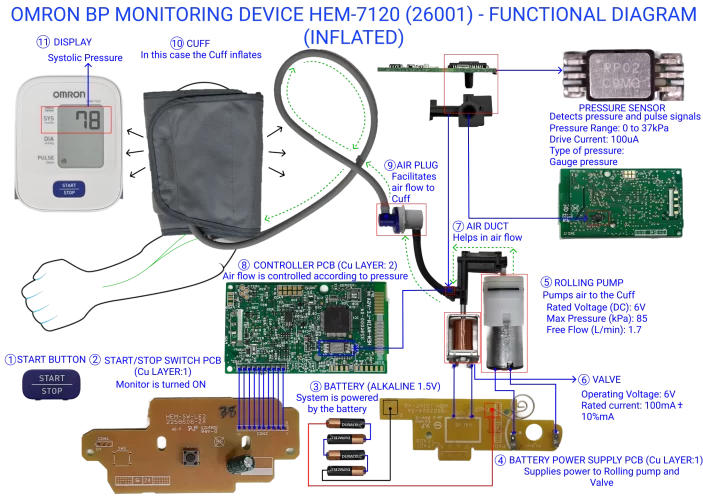
Cuff Inflation – Pressurization Phase
When the START button is pressed, the device begins by inflating the cuff. The diaphragm pump (a small DC motor-driven pneumatic pump) rapidly inflates the cuff to a pressure above the expected systolic pressure. During this phase, Omron's IntelliSense technology continuously monitors the pressure and oscillations. If the initial inflation level is not sufficient, the device automatically increases the pressure in small increments until adequate oscillation signals are received. This intelligent approach eliminates the need for manual pre-set inflation, making the process more comfortable for the user.
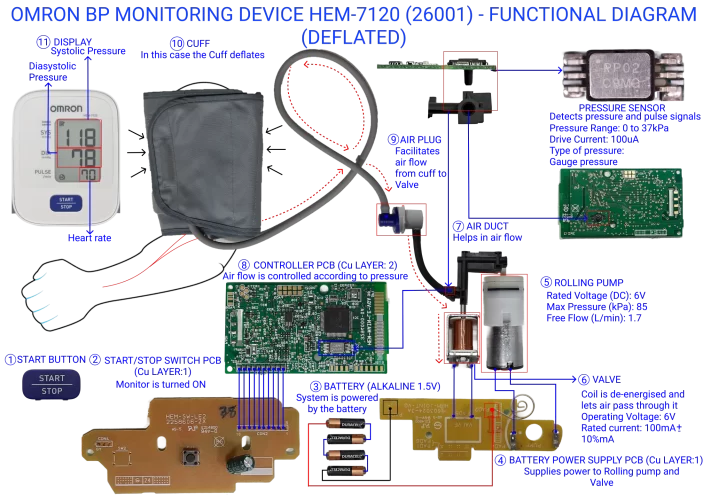
Cuff Deflation – Depressurization Phase
After reaching the required pressure level, the device gradually deflates the cuff at a controlled rate through a solenoid valve (electromagnetic valve). As the pressure decreases, the oscillations caused by the arterial blood flow are at their maximum - this point corresponds to the mean arterial pressure. The algorithm analyzes the amplitude envelope of these oscillations to determine the systolic and diastolic blood pressure values. The systolic pressure corresponds to the point where oscillation amplitude begins to increase rapidly, while the diastolic pressure is identified at the point where oscillation amplitude diminishes. Once the measurement is complete, the remaining pressure is released rapidly for user comfort.
04BOM Analysis
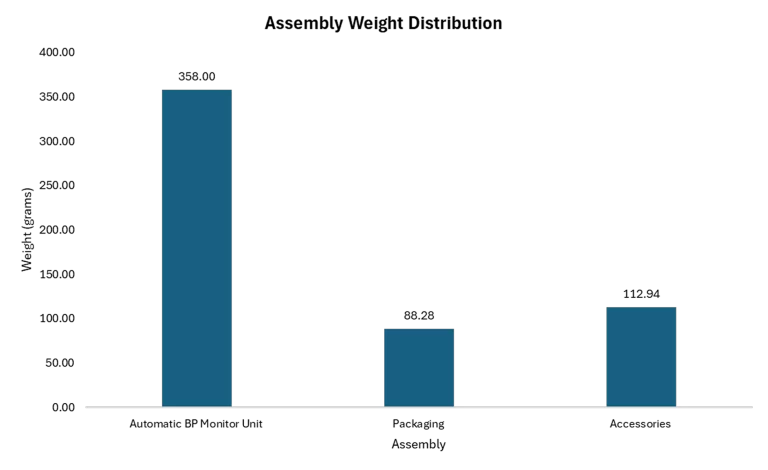
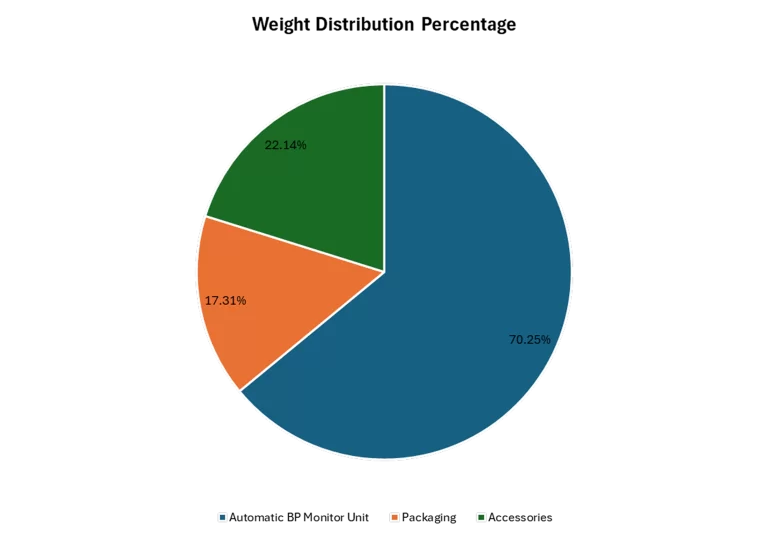
Assembly Weight Distribution
Our engineering team has performed a comprehensive last-level teardown analysis of the Omron HEM-7120 Blood Pressure Monitor. Through a meticulous bill of materials (BOM) study, we have systematically documented data on the various part attributes, providing detailed insights into the components of the device.
We map product level, sub-assemblies level and part details in very high detail leaving nothing to subjectivity. On the xcPEP platform, these data points are all interlinked which helps in analytics and inference drawing in real time.
Manufacturing Category Distribution
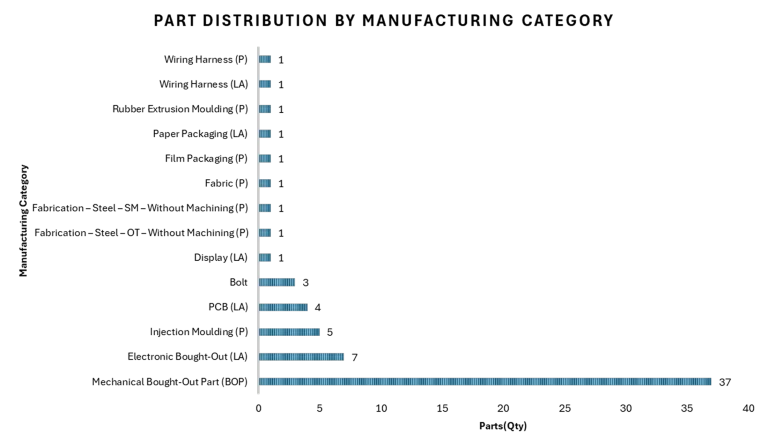
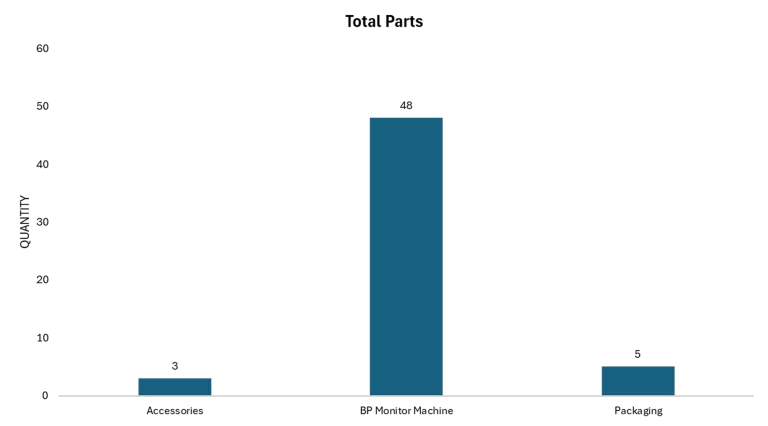
After detailed teardown and analysis, the inventory has components distributed across different manufacturing categories. The manufacturing category distribution analysis provides insights into the types of manufacturing processes used across the product's components.
xcPEP Bill of Material
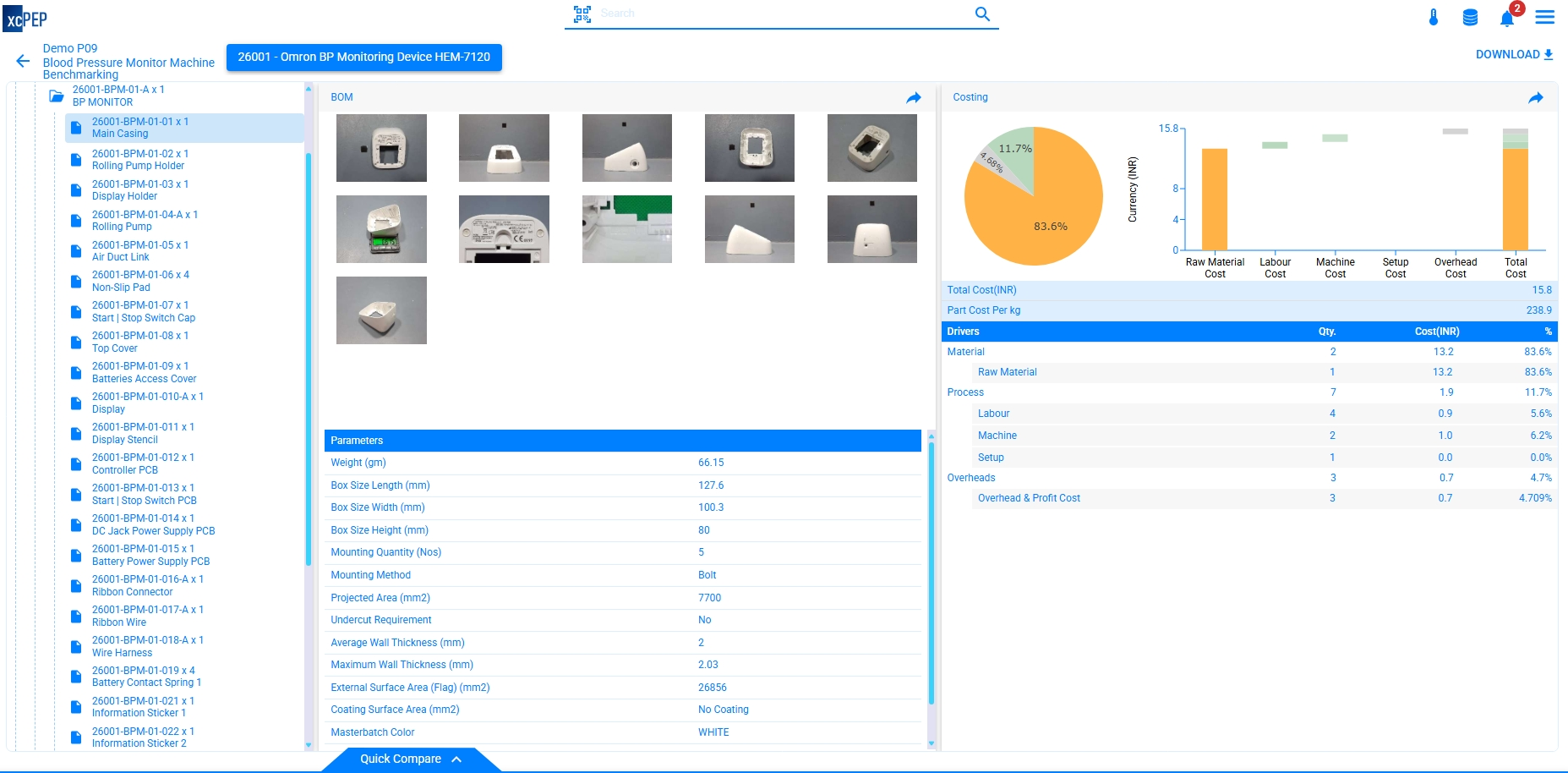
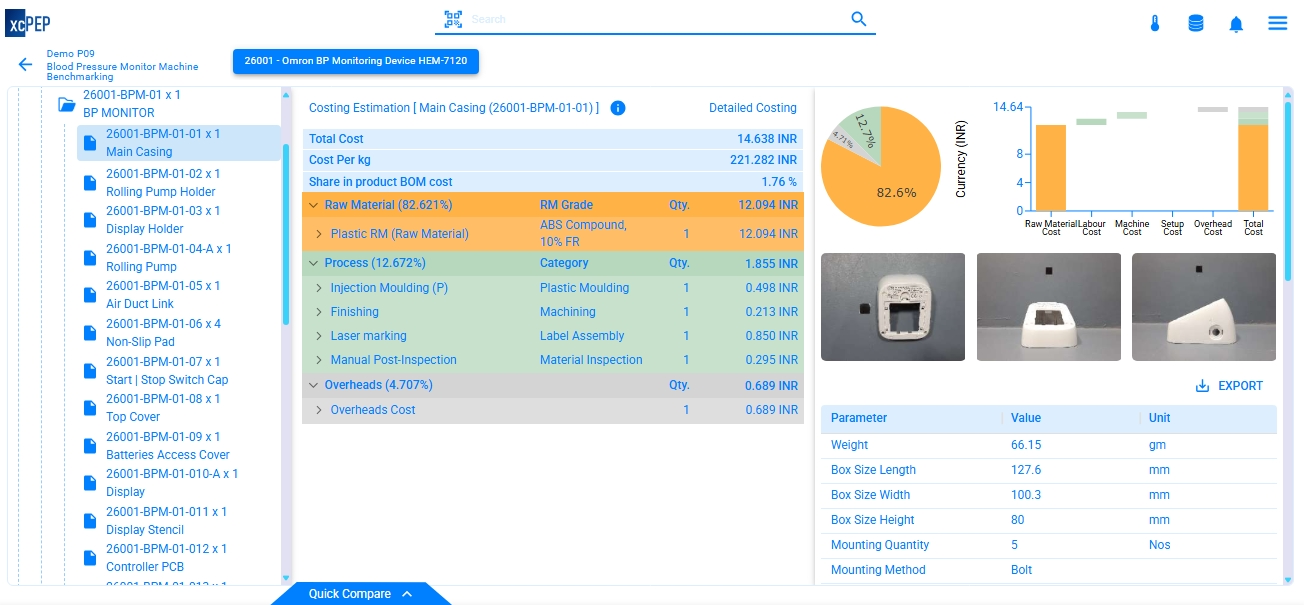
In order to perform a detailed analysis of the product, we have divided it into sub-assemblies and child parts. Child parts are created in xcPEP based on the manufacturing process categories. Part details like box dimensions, weight, images, material percentage, and material grade are mapped in BOM.
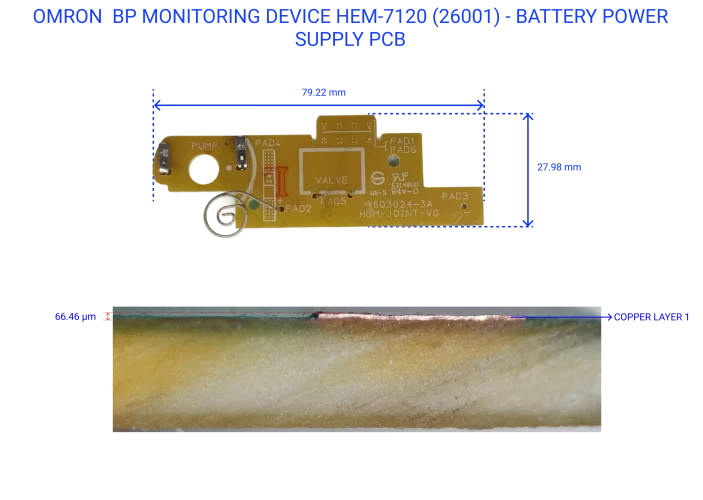
PCB & Electronic Details
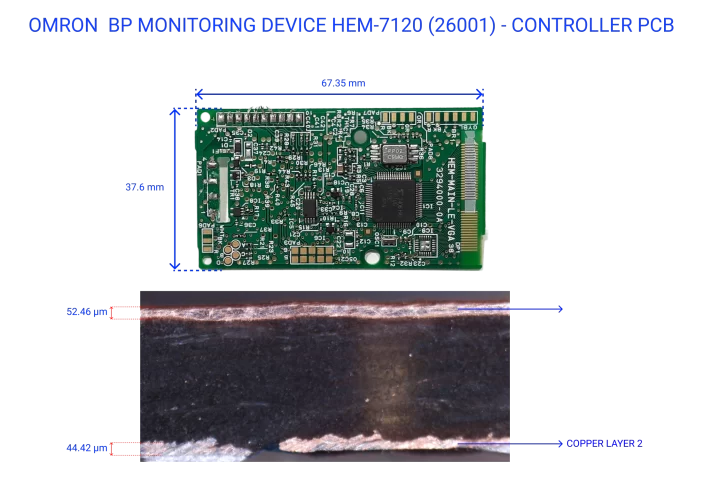
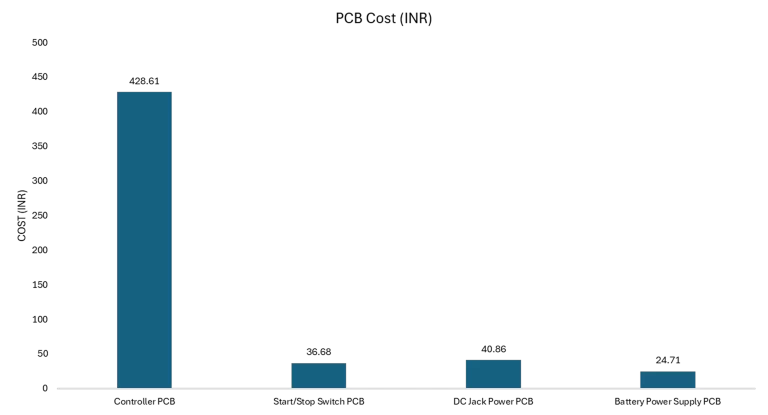
The device features a controller PCB that handles all signal processing, display driving, and motor/valve control functions. The teardown revealed detailed component placement and routing information.
Power Supply Options
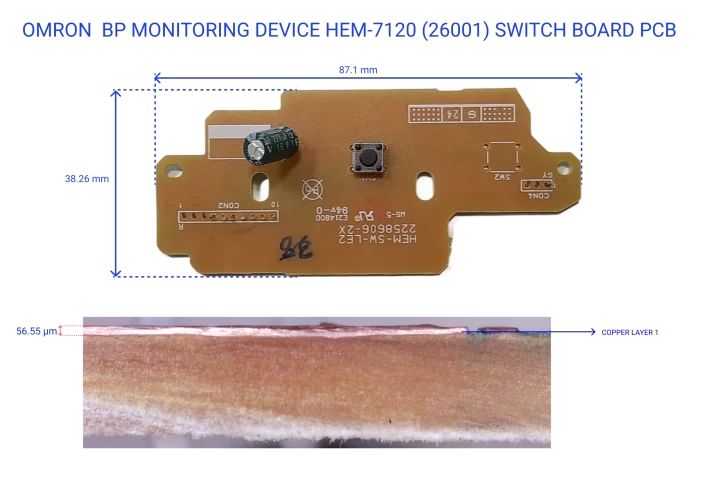
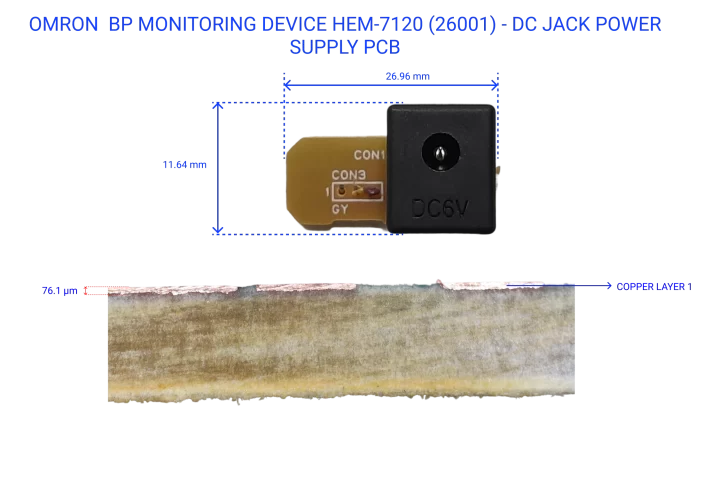
The Omron HEM-7120 can be powered via DC jack (external adapter) or 4x AA batteries. The dual power option provides flexibility for home and portable use.
05Should Cost Analysis
A comprehensive should cost analysis (SC) analysis was undertaken to evaluate the manufacturing cost of the Omron HEM-7120 BP Monitoring Device. The analysis revealed that the approximate manufacturing cost amounted to 1277 INR. Should cost analysis involves creating assumptions and establishing general guidelines to ensure a thorough evaluation.
- The Omron HEM-7120 BP Monitor is produced in Pune, Maharashtra.
- The study considered an annual volume of 30000 units.
- The latest material rates, labour hourly rates, and machine hour rates were used for the calculations.
- PCB Child parts are considered as bought out in bulk from spot buy sites like Digi key, Mouser Electronics.
- Indian Rupees (INR) currency is used for cost analysis.
- Tool cost is assumed to be paid upfront by the OEM & the total cost of the tool is divided by total number of parts made in a year.
Accessories Cost Analysis
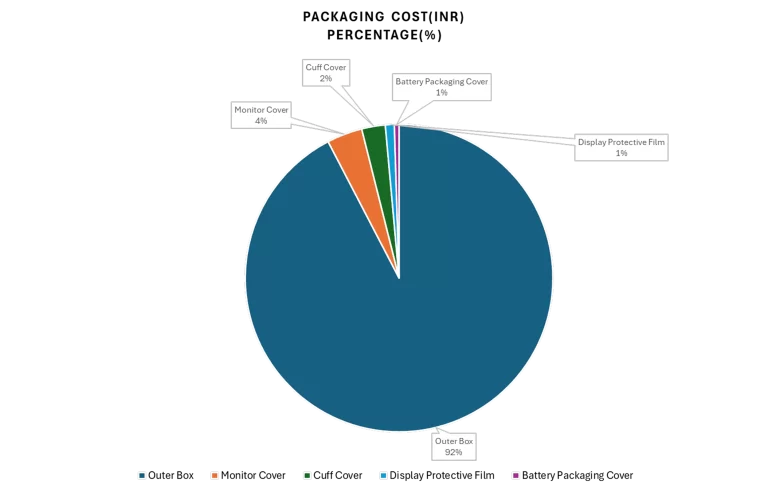
Packaging Cost Analysis

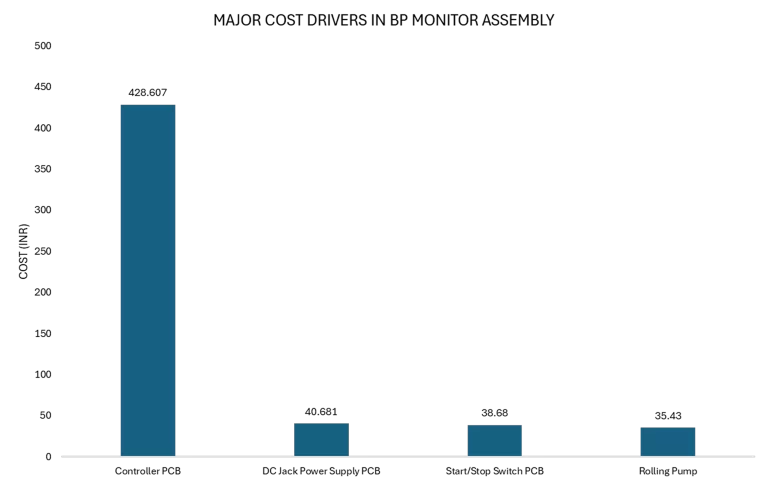
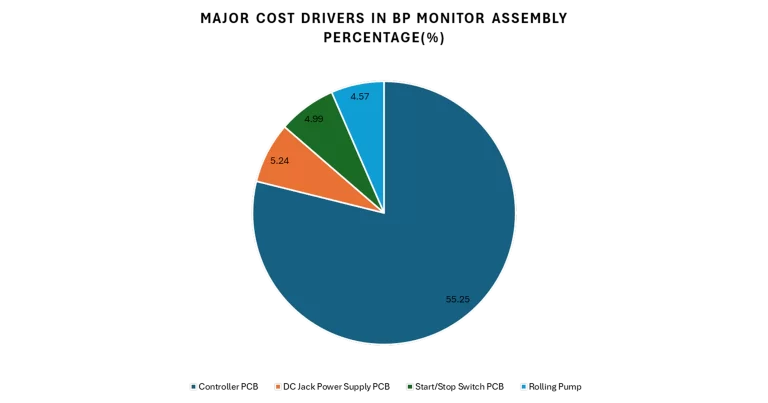
Major Cost Drivers
PCB Cost Contribution Analysis
Software Platforms Used
Should Cost Software
xcPEP delivers real-world accurate, transparent & defensible should cost analysis of mechanical, electrical & electronics components from drawings or physical parts.
Explore xcPEP →
Should CostData
xcPROC is the centralized database engine powering xcPEP. Built entirely by ASI's data research team, each database is meticulously curated to be region-specific and time-specific.
Explore xcPROC →